

What Is a Backlink? Definition, Types, and Why They Matter for SEO
A backlink is a link from one website that points to a page on another website. When an external site links to your content, that link is called a backlink, an inbound link, or an incoming link. Backlinks are one of the strongest signals search engines use to determine how a page ranks in search results.
From your perspective as the site being linked to, every link you receive from a different domain is a backlink. From the linking site’s perspective, it is an outbound link. The terms describe the same link viewed from opposite sides.
Example: If a marketing blog links to this article with the anchor text “define backlink,” that is a backlink to this page. The marketing blog earns nothing from it; the benefit in terms of search engine authority flows to the page being linked to.
Backlinks are different from internal links. An internal link connects two pages within the same domain. Only links from external websites count as backlinks.
Why Are Backlinks Important for SEO?
Search engines treat backlinks as votes of confidence. When a reputable website links to your page, it signals that your content is trustworthy and worth referencing. The more high-quality backlinks a page has, the stronger the signal it sends to Google, which helps it rank for competitive queries.
Here is why backlinks remain one of the most important signals in SEO:
- They are a core Google ranking factor. Google’s original PageRank algorithm was built on the idea that links are endorsements. In 2016, Google’s Andrey Lipattsev confirmed that links, content, and RankBrain are Google’s top three ranking signals. Google’s own How Search Works documentation still lists links as a key relevance signal.
- They transfer link equity. When a high-authority domain links to your page, it passes a portion of its own authority, often called link juice or link equity. This improves the ranking potential of the linked page.
- They drive referral traffic. A backlink from a relevant, well-trafficked website sends direct visitors to your page regardless of search engine rankings.
- They help search engines discover and crawl your pages. When Googlebot follows a link from another domain, it can find and index pages that might otherwise take longer to appear in search results.
- They build topical authority. A cluster of backlinks from topically relevant sites tells Google that your content is recognized within its subject area, supporting rankings across related queries.
- They matter for AI-driven search. Backlinks form the web graph that AI search tools crawl for citations. Being referenced by high-authority, relevant sites increases the likelihood of your content appearing in AI Overviews and generative search answers.
Dofollow vs. Nofollow Backlinks
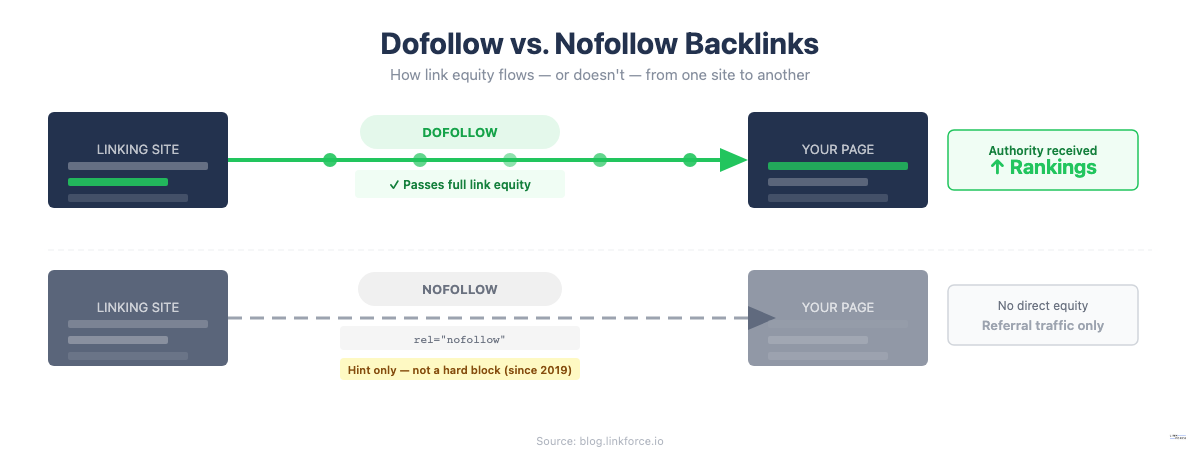
Not all backlinks pass ranking power. The distinction between dofollow and nofollow links is fundamental to understanding how link equity flows across the web.
A dofollow backlink is the default link type. It has no special attribute. It tells search engines to follow the link and pass PageRank from the linking site to the target page. These are the links that directly influence search rankings.
A nofollow backlink carries the rel="nofollow" attribute, which Google introduced in 2005 to combat comment spam. It originally instructed search engines not to pass PageRank through the link. In September 2019, Google updated its treatment of nofollow from a hard directive to a hint, meaning Googlebot may now choose to follow nofollow links and factor them into its signals in some cases.
| Dofollow | Nofollow | |
|---|---|---|
| Passes link equity? | Yes | No (treated as a hint since 2019) |
| HTML attribute | None (default) | rel=”nofollow” |
| Common use | Editorial links, guest posts, resource pages | User-generated content, paid links, comment sections |
| Direct SEO value | High | Lower, but contributes indirectly |
Two additional attributes exist for specific link types: rel="sponsored" for paid or affiliate links, and rel="ugc" for user-generated content. Both function similarly to nofollow.
A natural link profile contains a mix of dofollow and nofollow links. A profile consisting almost entirely of dofollow links from low-quality sources can appear manipulated and may trigger a manual action from Google. Nofollow links from high-traffic platforms such as major social media networks, Wikipedia, or news sites can also generate substantial referral traffic even without passing PageRank.
What Makes a Backlink Valuable?
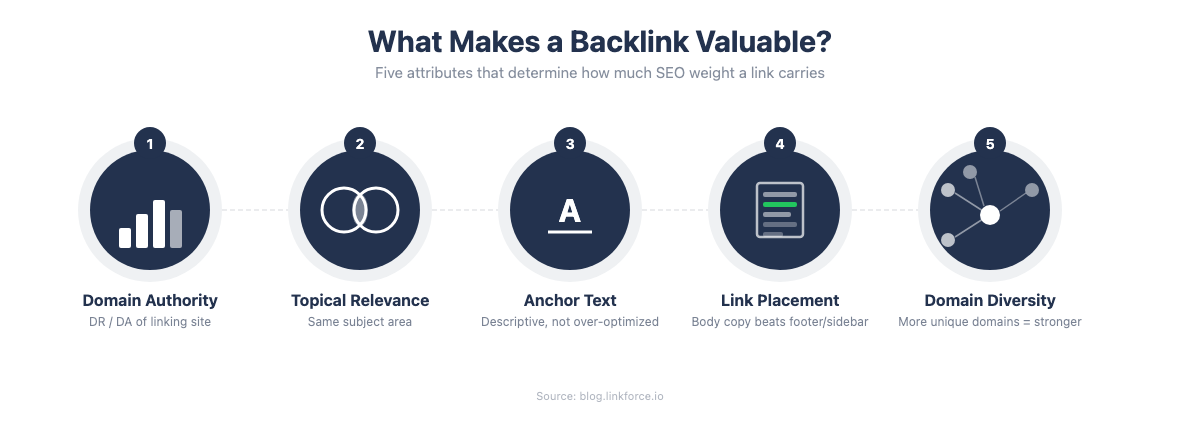
Not all backlinks are equal. A single link from a trusted, relevant source can outperform dozens of low-quality links. These five attributes determine backlink value:
- Domain rating of the linking site. A link from a well-established domain carries more weight than one from a new or low-authority site. Use tools like Ahrefs DR (0-100) or Moz DA as an estimate of domain strength.
- Topical relevance. A backlink from a site covering the same subject as yours is more valuable than one from an unrelated domain. A link to an SEO article from another SEO blog signals to Google that topical peers recognize your content.
- Anchor text. The visible, clickable text of the link gives Google context about what the linked page covers. Descriptive anchor text provides a stronger relevance signal. Over-optimized anchor text patterns (such as using the same exact-match keyword in every backlink) can trigger penalties. For a detailed look at how to analyze anchor text, see anchor text in Ahrefs.
- Link placement. An editorial link in the body of a relevant article carries more weight than one buried in a footer, sidebar, or author bio. Google assigns more trust to links placed naturally in editorial contexts.
- Domain diversity. One hundred backlinks from ten unique referring domains typically outperforms one hundred backlinks from a single domain. Google values diversity in your link profile. The number of unique referring domains pointing to a page is a stronger growth metric than raw backlink count. For a deeper look at this distinction, see backlinks vs. referring domains.
Types of Backlinks
Backlinks differ by how they are acquired and where they appear. Each type carries different SEO value.
Editorial backlinks are earned naturally when another site links to your content because it is genuinely useful. These are the most valuable type. They represent unsolicited endorsements and are the kind Google’s guidelines explicitly favor.
Guest post backlinks appear in articles you write for other websites. When placed on relevant, reputable sites, they are a legitimate link-building method. Google is critical of large-scale guest posting done primarily to build links rather than to serve readers.
Directory and citation backlinks come from listing sites, business directories, and niche indexes. They are typically lower in authority but useful for local SEO and brand visibility.
Forum and comment backlinks appear when you link to your site in a discussion thread or blog comment. Most are nofollow and carry limited ranking value, though they can drive targeted traffic.
Broken link backlinks are earned by finding dead links on other sites, creating content that replaces the broken resource, and asking the site owner to update the link to your page. This is one of the most effective white-hat link-building methods.
Resource page backlinks come from curated “best resources” pages in your niche. A link from a well-maintained, relevant resource page can be both valuable and sustainable.
Unlinked brand mentions are a related opportunity: if a site mentions your brand without linking to you, reaching out to request a link is often easier than cold outreach because the editorial intent is already there.
How to Use Backlinks: Finding, Tracking, and Building Them
Finding your existing backlinks: Three tools are widely used to check backlink profiles:
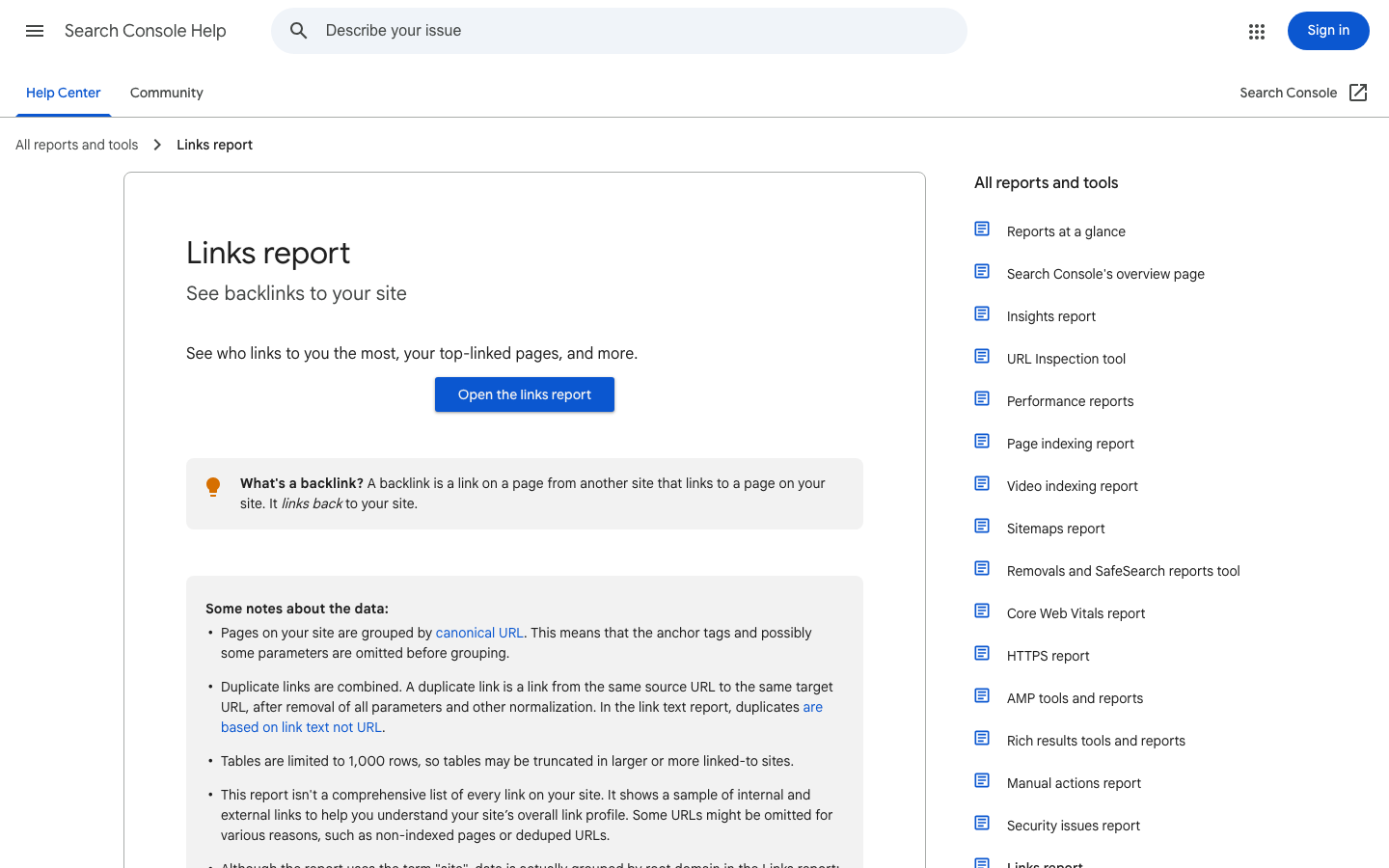
- Google Search Console (free): Navigate to Links > External Links. Shows the sites linking to you and your most-linked pages. Limited in scope but free and directly from Google.
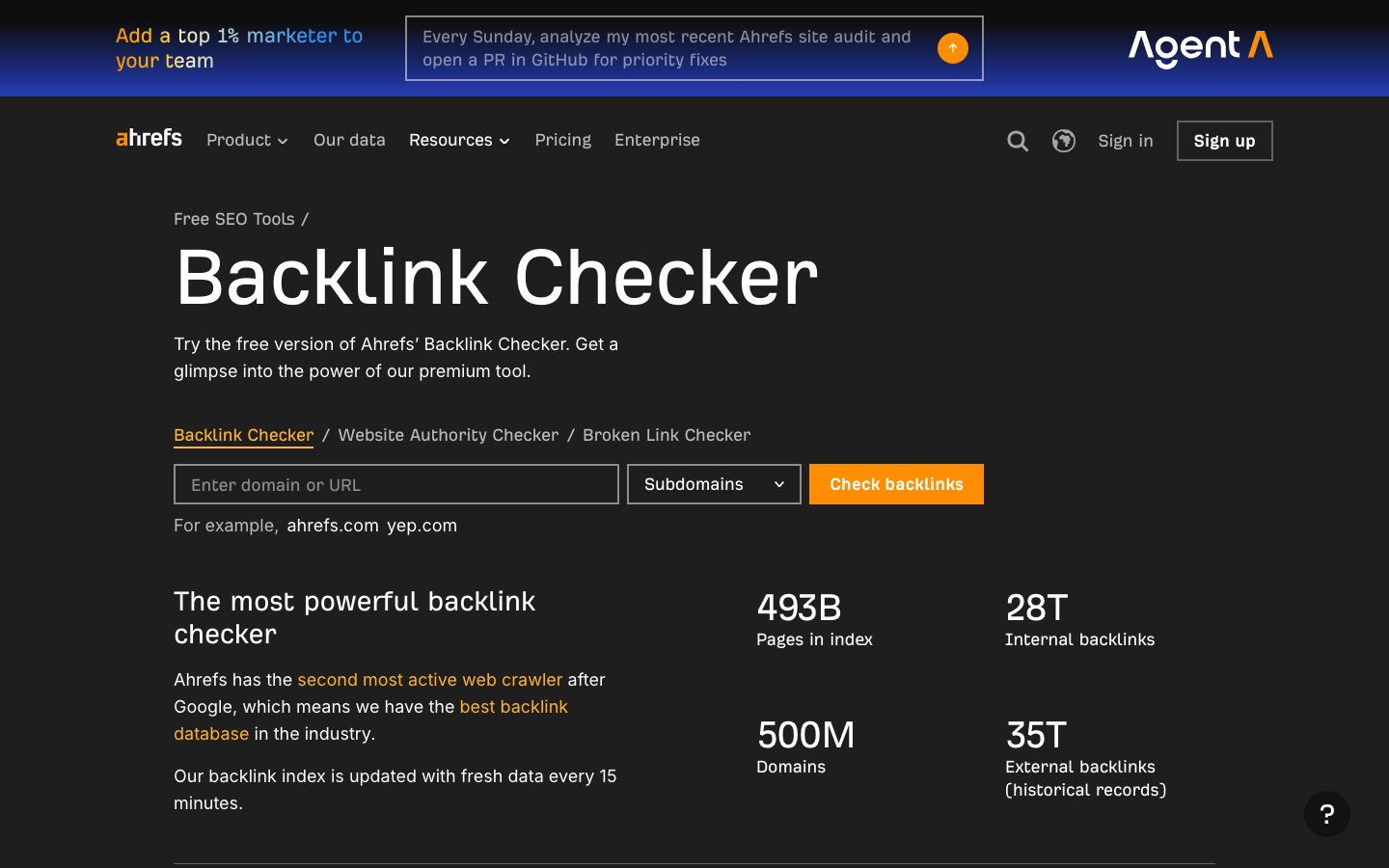
- Ahrefs: Comprehensive backlink index. Shows DR, anchor text, dofollow/nofollow status, link velocity, and lost links.
- Semrush: Similar functionality; useful for cross-referencing and identifying potentially toxic links.
Checking the value of a backlink: Look at the linking domain’s DR, the topical relevance of the linking page, and the anchor text used. One high-authority, topically relevant link is worth more than a hundred low-quality directory entries.
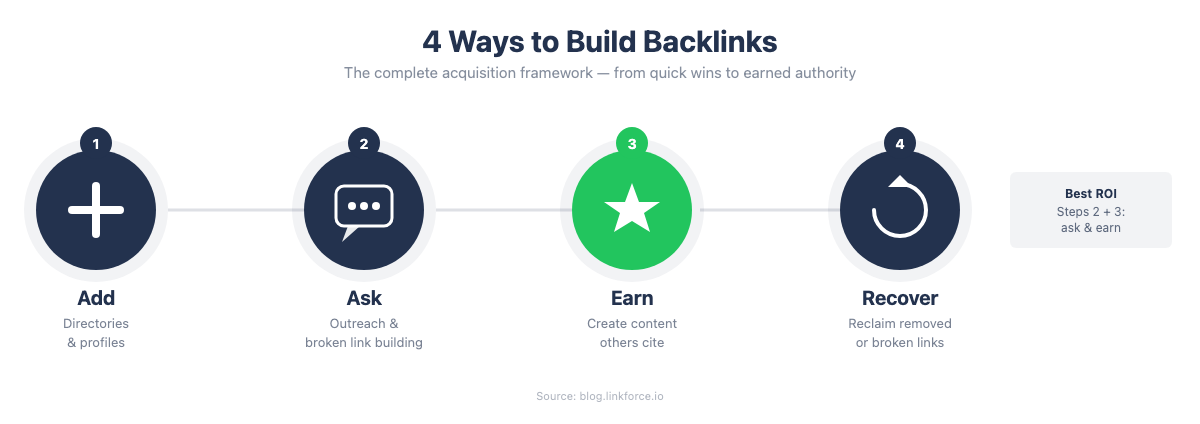
Building backlinks: The four general methods are: adding your link where appropriate (directories, profiles), asking for links (outreach, broken link building), earning links (creating content others want to cite), and recovering lost links (reclaiming removed or broken backlinks you previously had).
For a complete framework on reading and acting on your link data, see the backlinks analysis guide. For the broader off-page SEO context, the off-page SEO checklist covers how backlinks fit into the full picture.
Frequently Asked Questions
What is the difference between a backlink and an internal link?
A backlink is a link from an external website pointing to your site. An internal link connects two pages within the same domain. Both matter for SEO, but backlinks are the external votes of confidence that influence your domain’s authority and rankings for competitive queries. Internal links distribute link equity between your own pages and help search engines understand your site structure.
How many backlinks do I need to rank?
There is no fixed number. The number of backlinks needed depends on the competition for the query, your site’s existing authority, and the quality of the links. One high-authority backlink from a topically relevant domain often outperforms dozens of low-quality links.
Industry estimates vary by category: sites targeting low-competition keywords may rank with 50-100 quality referring domains; local businesses competing in their area typically need 100-200 locally relevant backlinks; pages competing for high-volume commercial queries often face competitors with 500 or more referring domains.
A practical approach: check how many unique referring domains the top three ranking pages have for your target keyword using a backlink analysis tool, then build toward closing that gap over time. Chasing a number without filtering for quality is rarely effective.
Are backlinks still important in 2026?
Yes. Backlinks remain one of Google’s top ranking signals. Their role has shifted from a volume metric to a trust and authority metric. Quality, relevance, and domain diversity now matter far more than sheer count. High-quality backlinks from relevant domains are still essential for competitive rankings, and they also increase the probability of your content being cited by AI Overviews and generative search tools.
What is a toxic backlink?
A toxic backlink is a link from a low-quality, spammy, or manipulative site that could harm your rankings. Signs include: links from link farms or private blog networks (PBNs), links from sites with no topical relevance to yours, links with over-optimized exact-match anchor text, and links from sites created solely for selling links. Backlink analysis tools flag these patterns. In severe cases, you can submit a disavow file through Google Search Console to ask Google to ignore specific links.
Can nofollow backlinks help with SEO?
Yes, indirectly. Nofollow backlinks do not pass direct link equity, but they contribute in several ways. They drive referral traffic from the linking site to yours. They add diversity to your link profile, making it look more natural. Since Google changed nofollow to a hint in 2019, Googlebot may also use them for page discovery and indexing. Nofollow mentions on high-authority platforms like Wikipedia, major news sites, and Reddit can signal to Google that your brand is referenced in trusted contexts, which correlates with stronger domain trust over time.
What is the difference between a backlink and a referring domain?
A referring domain is a website that links to you at least once. A backlink is each individual link from that domain. One referring domain can give you 10 backlinks if it links to your site from 10 different pages. Unique referring domains are typically the stronger metric for tracking link profile growth because they measure how many different sites endorse you.