

Guest posting software is the category of tools that handles one or more stages of a guest post campaign: finding sites, managing blogger outreach, sending personalized pitches, following up, and tracking which blog posts go live. This software category spans all-in-one outreach platforms like Pitchbox and BuzzStream, standalone email tools, prospecting software like Ahrefs Content Explorer, and guest posting marketplaces like Adsy.
The problem with managing guest posting without software is not writing the blog posts. It is the pipeline. Finding relevant sites, qualifying them by traffic and domain authority, tracking down the right editor contact, writing a personalized pitch, following up twice without annoying anyone, and then confirming the post actually went live — each step can break down without the right tool in place.
This guide covers 12 tools that handle different stages of that pipeline. They are organized by what they actually do, not lumped together in an arbitrary ranked list. You will find a quick comparison table, individual profiles with real pricing, and a decision section that matches each buyer profile to the right tool.
If you are still deciding which sites to pitch, the guest posting sites guide covers how to find and qualify targets before you start outreach.
Three Types of Guest Posting Software (and Which One You Need)
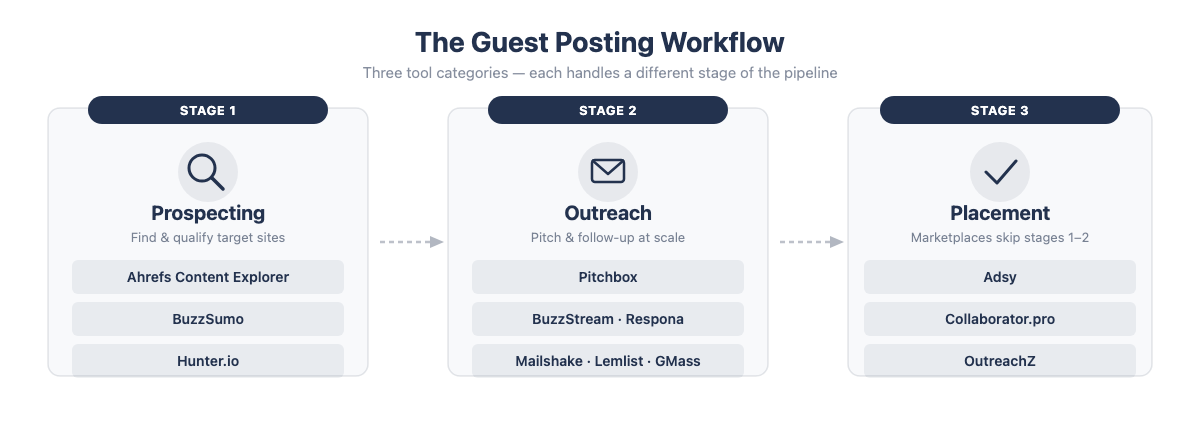
Guest posting software falls into three distinct categories. Picking the wrong one — an all-in-one outreach platform when you just need a marketplace, or a prospecting tool when you already have a list — wastes budget and setup time. Here is how the categories break down and which fits each workflow:
All-in-one outreach platforms handle the full pipeline: finding sites, managing contacts in a CRM, sending email sequences with automated follow-ups, and reporting on results. Pitchbox, BuzzStream, and Respona are the main tools in this category. These make sense for teams placing 100+ guest posts per month who need pipeline visibility across multiple campaigns.
Prospecting and contact tools solve the earlier problem: building the target site list and finding editor emails. Ahrefs Content Explorer, Hunter.io, and BuzzSumo belong here. Many teams use these alongside a separate email sending tool rather than paying for a full blogger outreach tool.
Guest posting marketplaces eliminate prospecting and outreach entirely. They are online directories where you browse, select, and purchase spots on websites that accept guest posts. Adsy operates one of the largest with 150,000+ sites and 20+ filtering options including GA4 traffic data. Collaborator.pro and OutreachZ are strong alternatives. Marketplaces offer speed and hands-on control over site selection without requiring a cold email campaign.
If you are new to guest posting or placing fewer than 20 guest posts per month, a marketplace is often the more practical starting point. Software pays off when volume and relationship management become the bottleneck.
For context on what makes a good guest post itself, the guest blogging guide covers the content and pitch strategy side.
Guest Posting Software at a Glance
The table below covers all 12 tools with their type, entry price, best-fit use case, and a summary rating. Use it to shortlist before reading the individual profiles.
| Tool | Type | Starting Price | Best For | Rating |
|---|---|---|---|---|
| Pitchbox | All-in-one | $165/mo | Agencies, high-volume campaigns | 9.2/10 |
| BuzzStream | All-in-one | $24/mo | Small teams, relationship-led outreach | 8.8/10 |
| Respona | All-in-one | Pay-per-placement | Content-driven personalized campaigns | 8.5/10 |
| Mailshake | Email outreach | $59/mo | Teams with existing lists, volume sending | 8.0/10 |
| Lemlist | Email outreach | $39/mo | Highly personalized pitches, low volume | 7.8/10 |
| GMass | Email outreach | $25/mo | Gmail users on a tight budget | 7.2/10 |
| Ahrefs Content Explorer | Prospecting | From $129/mo | Finding sites by topic with traffic filters | 9.0/10 |
| Hunter.io | Contact lookup | Free / $49/mo | Finding editor email addresses | 8.5/10 |
| BuzzSumo | Prospecting | From $99/mo | Content-based publisher discovery | 8.0/10 |
| Adsy | Marketplace | Pay-per-post | Fast self-serve placements | 8.3/10 |
| Collaborator.pro | Marketplace | Pay-per-post | Data-transparent site selection | 8.1/10 |
| OutreachZ | Marketplace | Pay-per-post | Vetted editorial-quality publishers | 8.4/10 |
All-in-One Guest Posting Outreach Platforms
These tools handle the full outreach workflow: finding sites, storing contact history, sending personalized email sequences, and reporting on what went live. If you are managing more than a handful of campaigns at once, this is the category to evaluate.
Pitchbox — Best for Agencies Running Multiple Simultaneous Campaigns
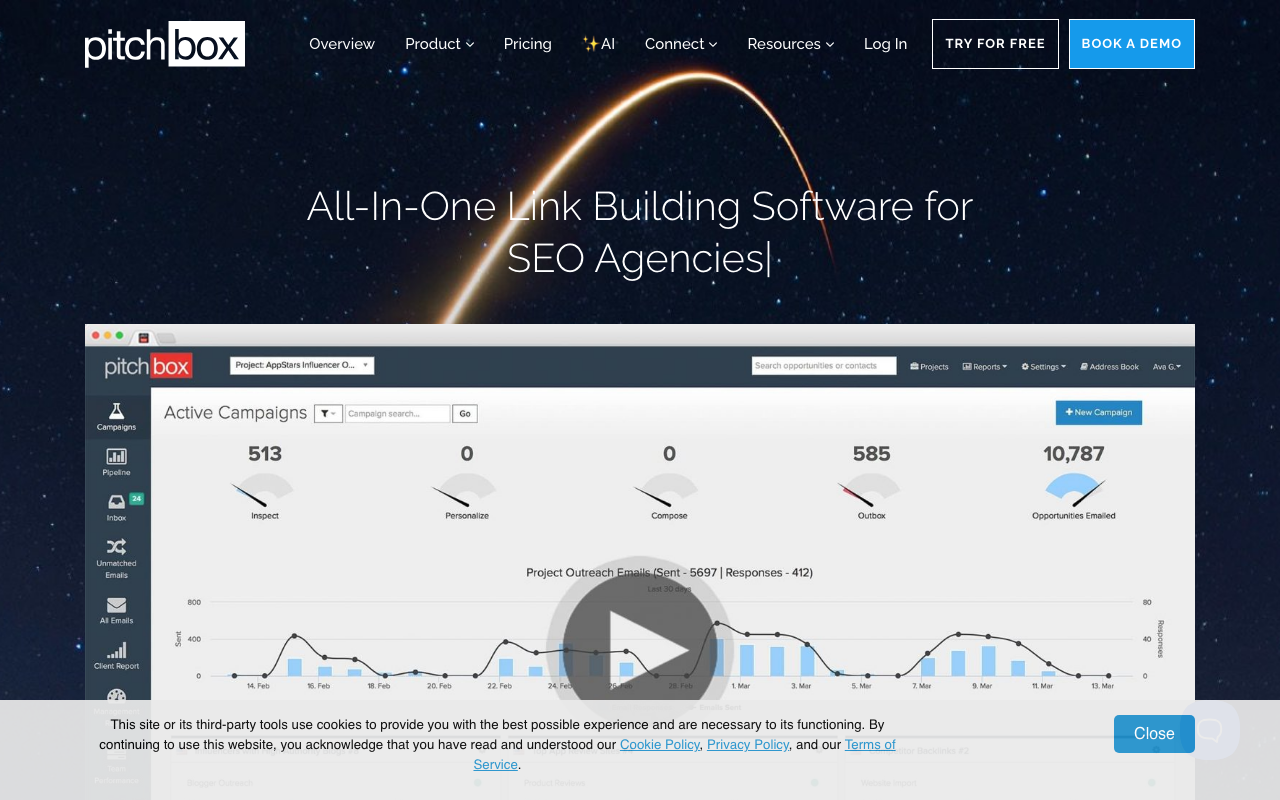
Pitchbox is the most capable all-in-one outreach platform in this category. It is built for teams running multiple link building or guest posting campaigns at once and combines prospecting, outreach automation, and reporting in a single workspace.
Prospecting: Pitchbox pulls sites directly from Ahrefs, SEMrush, Moz, and Majestic. You enter a keyword or competitor domain and the platform returns a prospect list with live domain metrics. This removes the step of exporting from one tool and importing into another.
Outreach automation: Sequences are conditional — you can set follow-ups to send only if a prospect has not opened the email, or branch based on a specific reply keyword. Time-zone scheduling and email account rotation reduce the chance of hitting spam filters. For agencies managing 10+ clients, workspace separation keeps campaigns from bleeding into each other.
Reporting: Pitchbox tracks responses, placements, and link status across campaigns. Agency plans include client-facing reports.
Pricing: Pro plan is $165/mo for 2 users and 2,000 outreach emails per month. Advanced plan is $420/mo with unlimited users and 25 workspaces.
Best for: Agencies with five or more simultaneous guest posting campaigns who need conditional automation, workspace separation, and native SEO tool integrations.
Limitation: The price point is too high for solo operators or in-house teams running one or two campaigns at a time. BuzzStream or Respona cover those cases at a fraction of the cost.
BuzzStream — Best for Relationship-Led Outreach
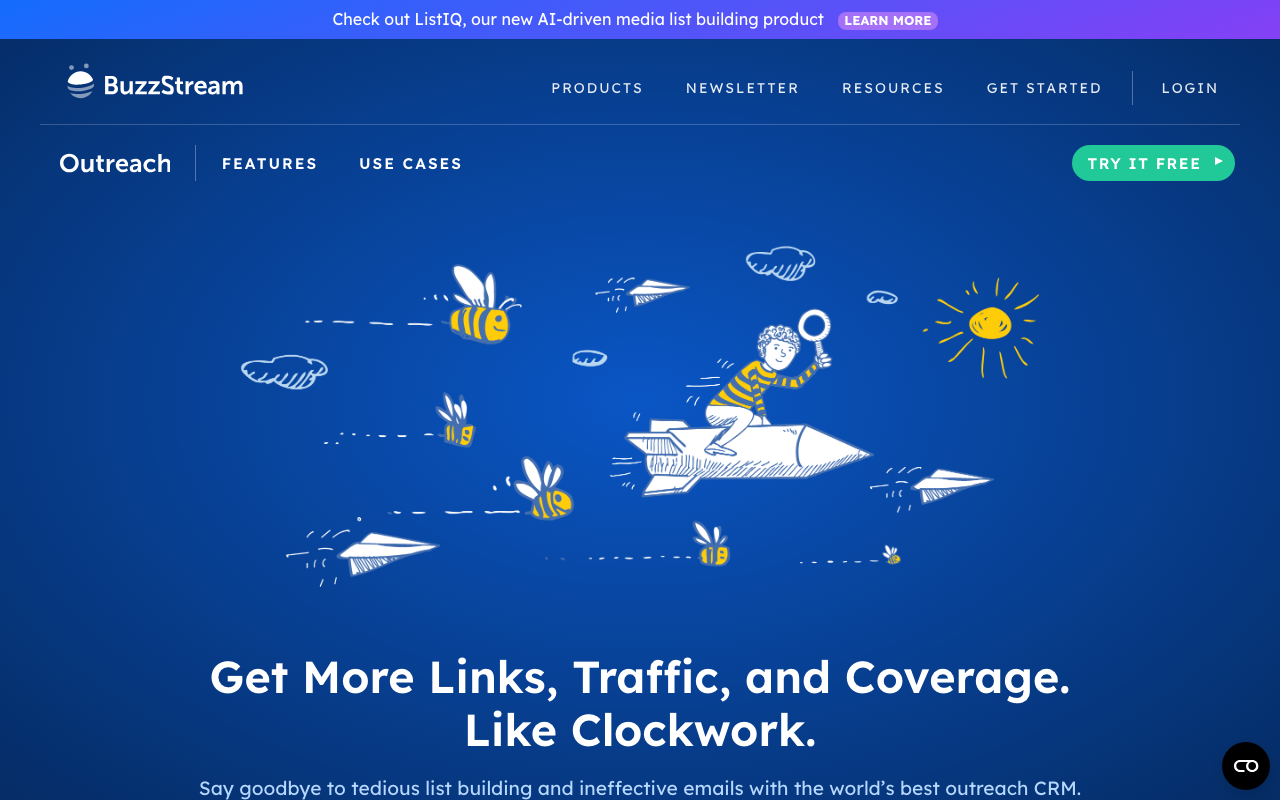
BuzzStream takes a relationship-management-first approach to guest post outreach. Rather than maximizing automation, it focuses on maintaining contact history so that outreach feels less like a mass email blast and more like a continuing conversation.
How it works: The Buzzmarker browser extension lets you research a site and save the contact in one click while you are browsing. BuzzStream stores every email, tweet, and interaction with that contact in a centralized CRM. When you come back to a prospect six months later, the full history is there.
Outreach: Email sequences run from inside the platform with open and click tracking. You can assign follow-up tasks to team members and set reminders. The focus is on relationship management rather than conditional automation.
Team features: Projects separate campaigns, and team members can see each other’s contact histories to avoid duplicate outreach to the same editor.
Pricing: Starter is $24/mo for 1 user and 1,000 contacts. Growth is $124/mo for 3 users and 25,000 contacts. Professional is $299/mo for 6 users and 100,000 contacts.
Best for: Small in-house teams and boutique agencies running relationship-first outreach campaigns where contact history matters. The $24/mo Starter plan makes it the most accessible full-featured option in this category.
Limitation: Prospecting is less automated than Pitchbox. If you are starting with no prospect list, you will still need Ahrefs or another tool to build it. Email volume caps on lower tiers can become a bottleneck for high-volume campaigns.
Respona — Best for Content-Driven Guest Posting
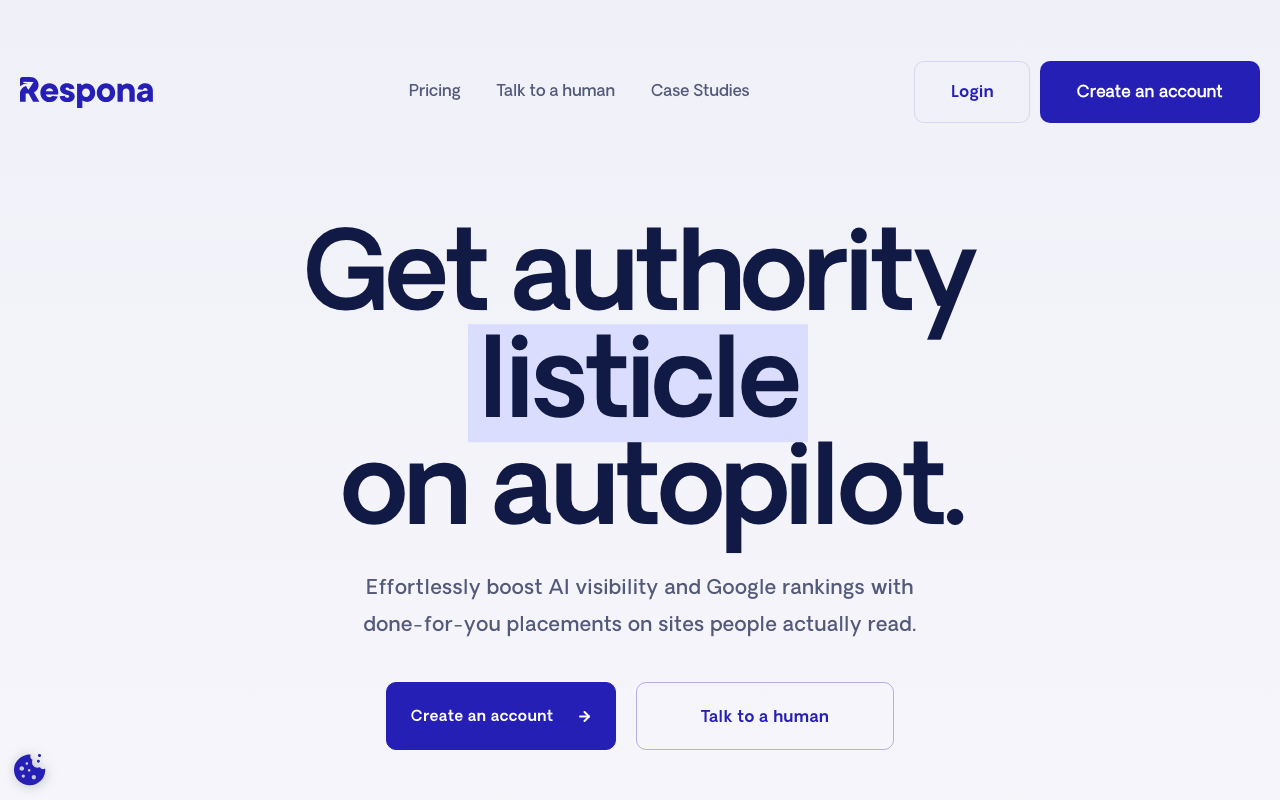
Respona links outreach directly to your content. When you set up a campaign, you connect it to a specific article or page. The platform then surfaces relevant prospects and generates personalized icebreaker sentences based on the prospect’s recent content.
AI personalization: Respona drafts the first line of each outreach email based on what the prospect has published recently. You review and edit before sending. This is useful for content-first outreach where the pitch angle needs to reference the editor’s work specifically.
Prospecting: Built-in search returns prospect sites by topic. You can filter by DR, traffic, and language, then pull contact information directly in the platform.
Pricing model change: Respona shifted from a subscription model to pay-per-placement. Current pricing is approximately $100 per placement, with volume discounts reaching up to 60% for high-volume clients. This makes it cost-effective for teams placing 20+ guest posts per month but expensive for occasional use.
Best for: Content marketers who want AI-assisted personalization without managing a full outreach CRM. Works well for teams where the pitch quality matters more than the sending volume.
Limitation: The pay-per-placement model is unpredictable for budgeting compared to a flat monthly subscription. Teams placing fewer than 10 pieces per month may find it more expensive than BuzzStream or Mailshake.
Email Outreach Tools That Work for Guest Posting
If you already have a qualified prospect list and editor contacts, you do not necessarily need a full outreach platform. These tools handle the sending side: sequences, follow-ups, personalization at scale, and reply tracking.
For guidance on writing pitches that get accepted, the outreach emails guide covers templates and best practices.
Mailshake — Best for Straightforward Volume Campaigns
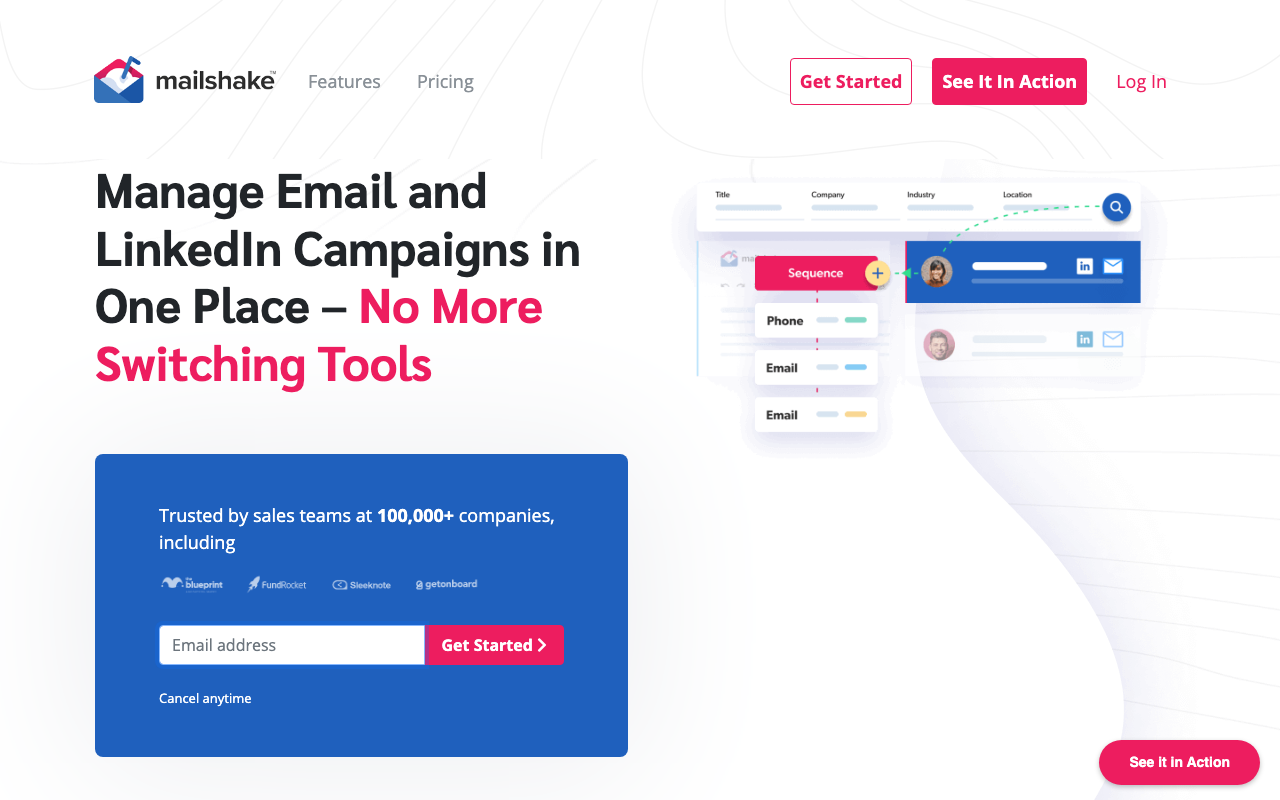
Mailshake is an email outreach tool that covers the core sending workflow without the complexity of a full outreach CRM. You import a prospect list, write a sequence, and Mailshake handles the scheduling, follow-ups, and reply detection.
Key features: Multi-step email sequences with automatic follow-up pausing when a prospect replies. A/B testing across subject lines and email copy. LinkedIn task integration for multi-channel outreach. Reply detection stops the sequence when a response comes in.
Pricing: Starts at approximately $59/mo per user for the Email Outreach plan.
Best for: Teams that have already built and qualified their prospect list using Ahrefs or Hunter.io and want a dedicated sending tool without paying for a full all-in-one platform.
Limitation: No built-in prospecting. You bring your own list. CRM depth is limited — it does not maintain relationship history across campaigns the way BuzzStream does.
Lemlist — Best for Highly Personalized Pitches
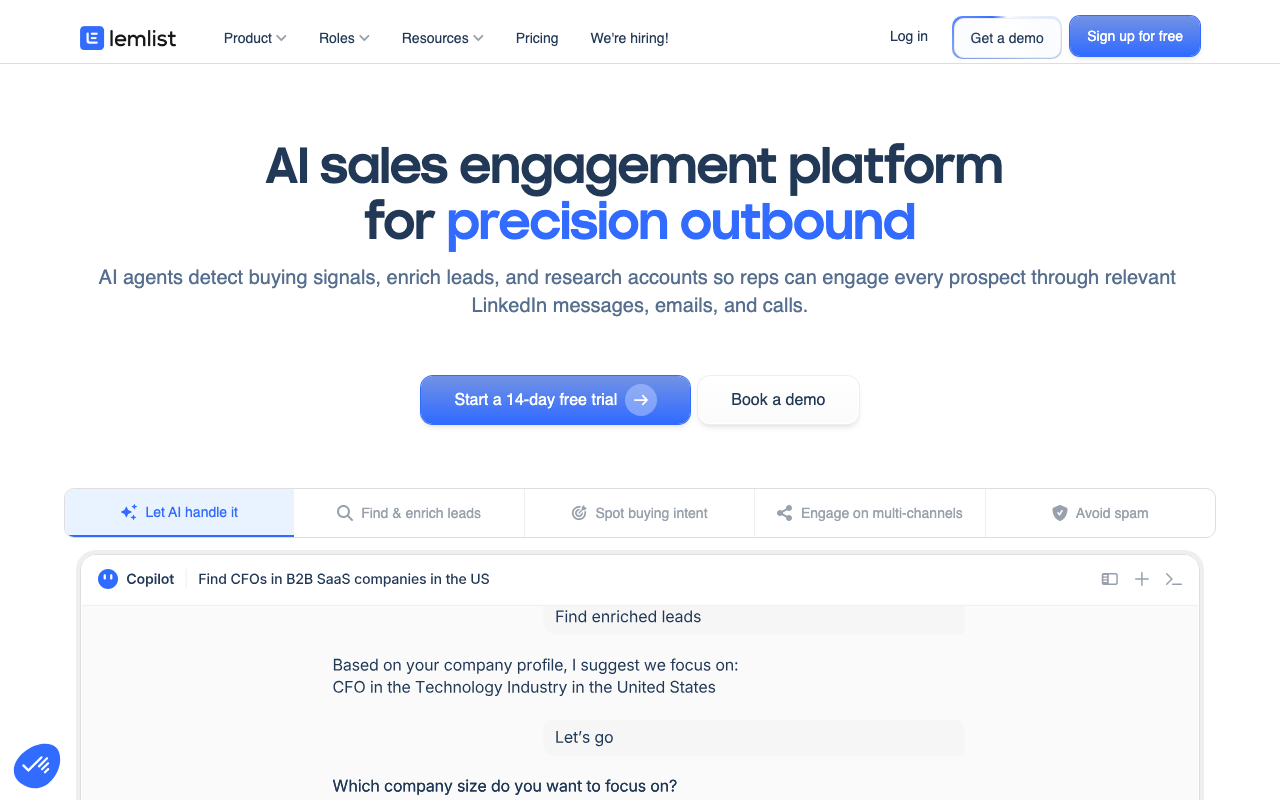
Lemlist specializes in personalization. The core differentiator is dynamic image personalization: you can embed a prospect’s name, website screenshot, or company logo into the email image itself. It also supports video pitches and multi-channel sequences that include LinkedIn steps.
Key features: Image personalization at scale using prospect-specific variables. Video thumbnails in emails. Email + LinkedIn multi-channel sequences. Conditional steps based on prospect engagement.
Pricing: Email outreach plan starts at approximately $39/mo.
Best for: Low-volume, high-quality guest posting campaigns where the personal touch matters. If you are pitching high-DR sites with editors who receive hundreds of generic pitches per week, Lemlist’s personalization can improve acceptance rates.
Limitation: The image personalization templates take time to set up. For bulk outreach to dozens of lower-tier sites, the setup overhead is not worth the gain. Lemlist works best at 20-50 pitches per week, not 200.
GMass — Best for Budget-Conscious Gmail Users
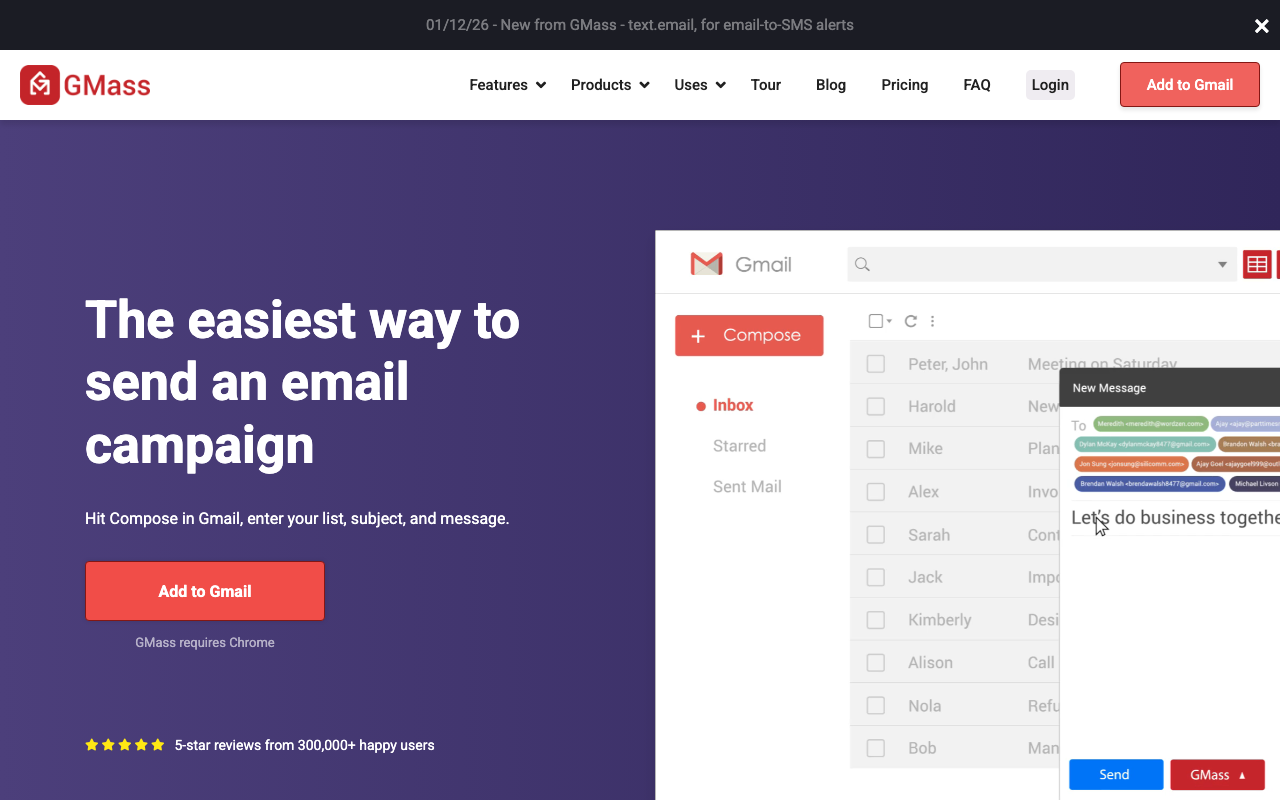
GMass runs directly inside Gmail as a Chrome extension. It adds mass emailing, mail merge, and follow-up automation to your existing Gmail account without requiring you to move to a separate platform.
Key features: Mail merge from Google Sheets. Automatic follow-up emails to non-openers or non-repliers. Open and click tracking. Scheduled sending. Works inside Gmail, so no new interface to learn.
Pricing: Individual plans start at approximately $25/mo.
Best for: Freelancers and small teams already sending from Gmail who want basic outreach automation without paying for a dedicated platform. The lowest total cost in this category.
Limitation: Gmail’s sending limits apply (typically 500 emails per day for free accounts, 2,000 per day for Google Workspace). No built-in prospecting. No CRM. Deliverability depends on your Google account reputation. Not suitable for agency-scale volume.
Prospecting and Site Discovery Tools
Before any pitch goes out, you need a list of relevant sites worth pitching. These tools help you find publishers by topic relevance, traffic, and domain authority. Most teams combine one of these with a separate email sending tool.
Ahrefs Content Explorer — Best for Finding Sites That Already Get Links
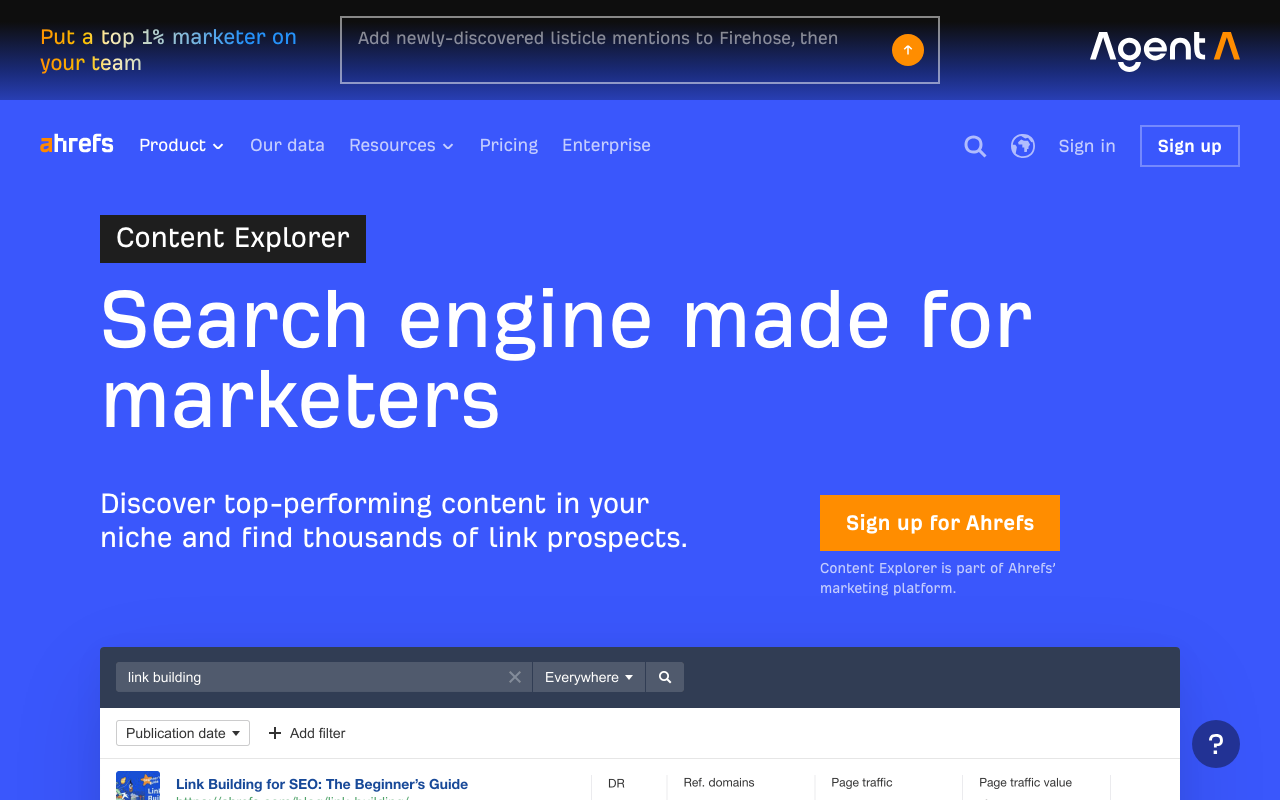
Ahrefs Content Explorer is a database of over a billion pages indexed by Ahrefs. For guest posting prospecting, it lets you find sites covering your topic that already have demonstrated link equity.
How to use it for guest posting: Search your topic or keyword in Content Explorer. Filter by “one article per domain” to deduplicate. Set minimum DR and organic traffic thresholds to qualify sites. Export the resulting list as a CSV prospect file. This workflow typically takes 30-45 minutes and returns a list of 50-200 qualified sites depending on the niche.
Pricing: Included in all Ahrefs plans starting from $129/mo. Not available as a standalone tool.
Best for: Teams already subscribed to Ahrefs for other SEO work. The content explorer workflow is one of the fastest ways to generate a qualified guest posting prospect list without manually checking each site.
Limitation: Ahrefs is expensive as a tool bought solely for prospecting. If you do not already use it for keyword research or backlink analysis, Hunter.io plus Google search operators is a more cost-effective alternative.
For a broader overview of link building tools across the full pipeline, the link building software guide covers the landscape beyond guest posting specifically.
Hunter.io — Best for Finding Editor Email Addresses
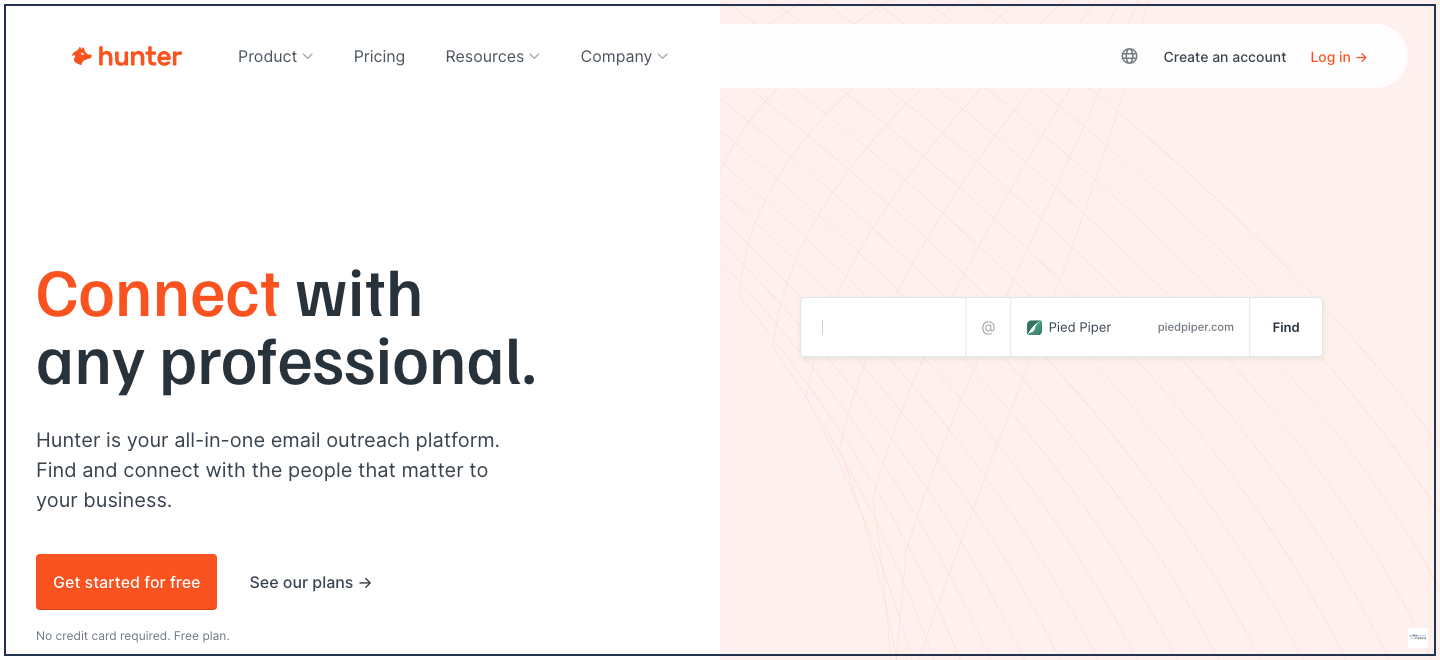
Hunter.io maintains a database of business email addresses indexed by domain. You enter a domain and Hunter returns all the email addresses it has found for that site, along with a confidence score for each.
How to use it for guest posting: Once you have a list of target domains from Ahrefs or a manual SERP search, run each domain through Hunter to find editor and contributor contact emails. Hunter also has an email verifier that checks deliverability before you send, reducing bounce rates.
Pricing: Free plan includes 50 credits per month, enough for basic domain lookups. Starter plan is $49/mo (or $34/mo billed annually) for 2,000 credits per month, with one credit spent per email found and half a credit per verification. Higher tiers are available for agency volume.
Best for: Any team that needs to find editor email addresses for a list of target sites. Hunter pairs well with Ahrefs Content Explorer: Ahrefs builds the site list, Hunter finds the contacts.
Limitation: Smaller blogs and personal websites with fewer than a few thousand monthly visits often have no email data in Hunter’s database. For these sites, you may need to find contact information manually from the site’s contact page or social media.
BuzzSumo — Best for Content-Based Publisher Discovery
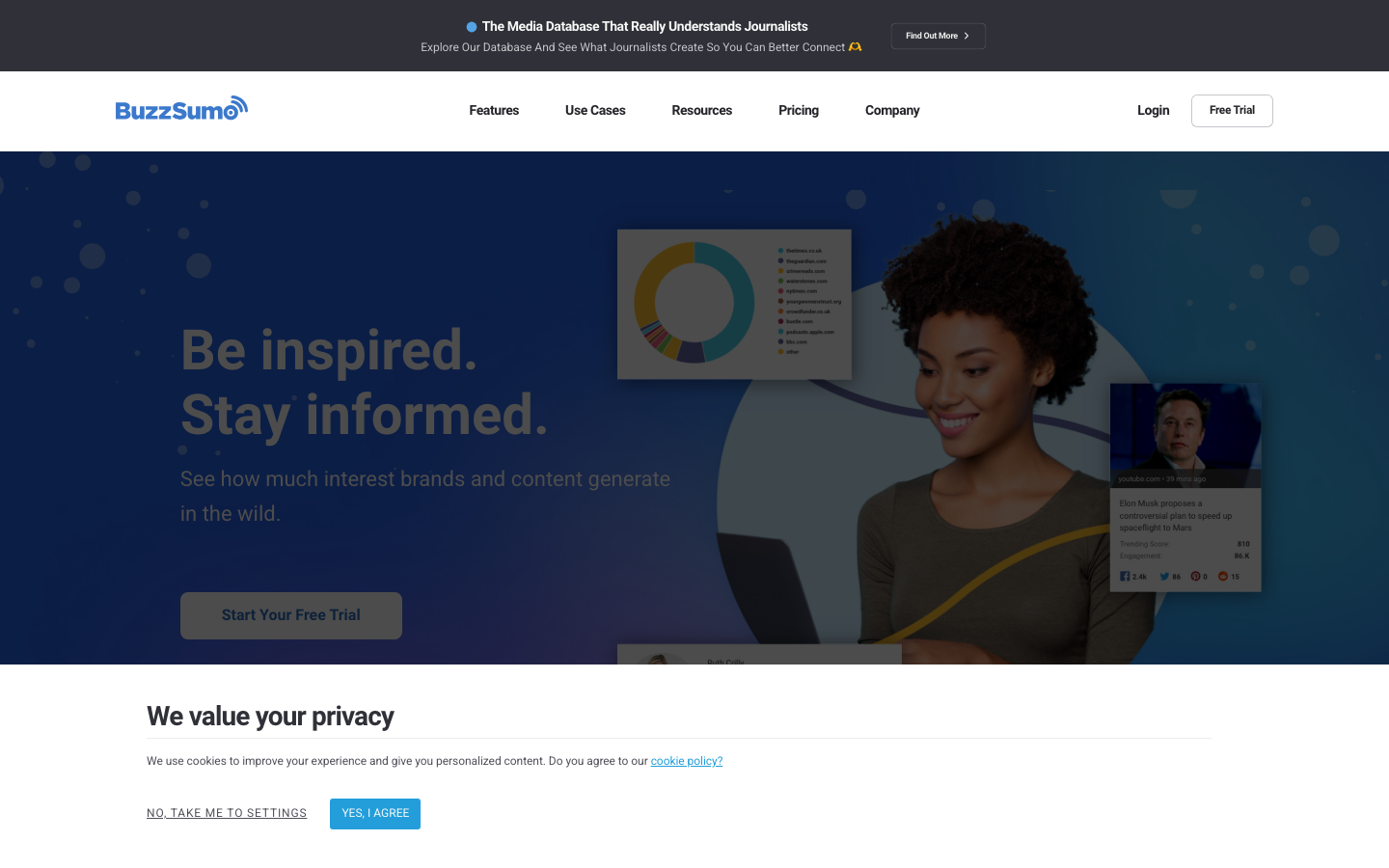
BuzzSumo indexes content performance: which articles get the most shares, links, and engagement by topic. For guest posting prospecting, it helps you identify publishers who regularly create or accept content in your niche and who have demonstrated audience engagement.
How to use it for guest posting: Search your topic in BuzzSumo and filter by date range. Identify domains that repeatedly publish well-performing content on your subject. These are sites with active editorial standards and an engaged audience — both good signals for a guest post target.
Pricing: Plans start at approximately $99/mo.
Best for: Content marketers who want to understand the editorial landscape of a topic before pitching — not just which sites exist, but which are actively publishing and getting traction. Useful for finding niche-specific publishers that may not rank prominently in Ahrefs.
Limitation: BuzzSumo is stronger for content research than for building a cold prospect list. It shows which sites publish well but does not surface contact information, so you still need Hunter.io for the email lookup step.
Guest Posting Marketplaces — When You Want the Sites Handled For You
Marketplaces take the prospecting and outreach work out of the equation entirely. You browse a catalog of publishers, filter by niche, DR, and traffic, pay per placement, and submit your content directly. No cold emails, no follow-up sequences, no relationship management.
This approach makes sense when you need placements fast, when you do not have time to build outreach relationships, or when your volume is too low to justify an all-in-one tool subscription. The tradeoff is less control over which specific site you land on and higher cost per placement compared to self-managed outreach.
For a list of free and vetted sites to pitch directly, the free guest posting sites guide and the guest posting sites directory are useful complements to any marketplace.
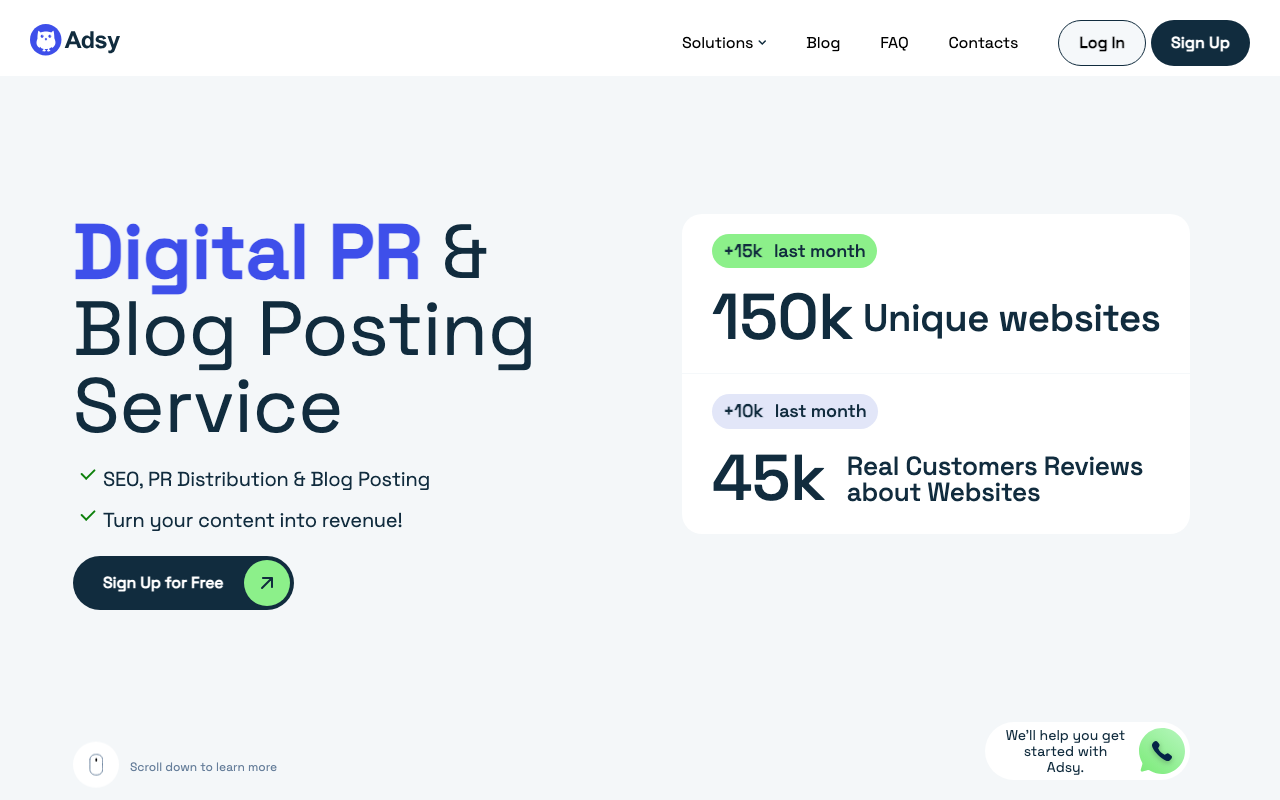
Adsy — Best Self-Serve Marketplace
Adsy is a guest posting and content placement marketplace with a self-serve interface. Publishers list their sites with pricing, niche, and basic SEO metrics. You browse, filter, order, and submit content without going through a managed service workflow.
What it does: Publisher database with DR, monthly traffic, and price-per-post filters. Content submission workflow with editor review. Order tracking and delivery confirmation.
Pricing: Pay-per-post. Price varies by publisher. Sites can range from budget placements on lower-DR blogs to premium placements on high-traffic domains.
Best for: Teams that want fast, self-serve guest post placements without the overhead of outreach. Good for testing new niches or link building campaigns quickly.
Limitation: Publisher quality varies. Not all sites listed are editorially maintained; some exist primarily as link sellers. Vet individual publishers by checking their organic traffic in Ahrefs or Google before purchasing. The lowest-priced options should be scrutinized before buying.
Collaborator.pro — Best for Data-Transparent Site Selection
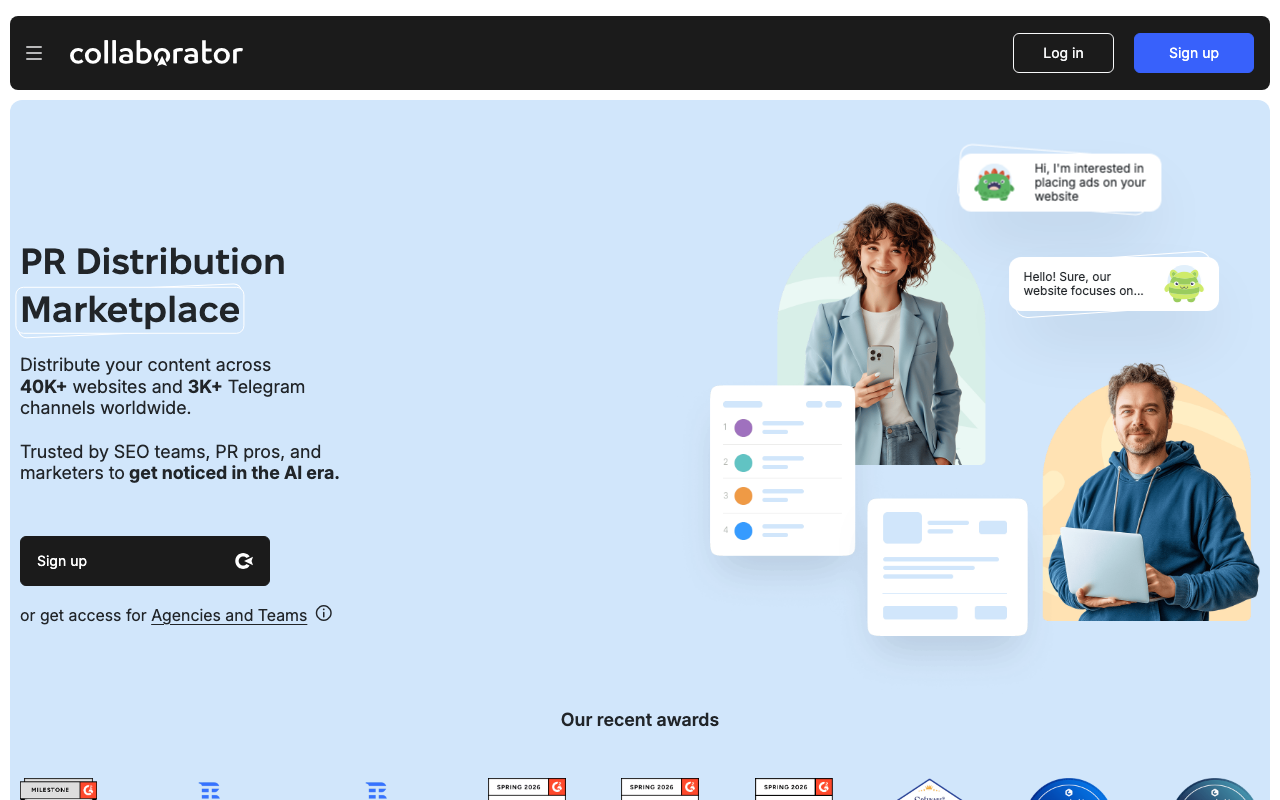
Collaborator.pro is a guest posting and native advertising marketplace focused on giving buyers detailed site data before they commit. Filters include niche category, country, language, organic traffic, DR, and price.
What it does: Advanced site filtering with real traffic data, not just claimed metrics. Direct placement ordering with editorial review. The platform reports that over 75% of placements go live within 48 hours of content submission.
Pricing: Pay-per-post. Pricing varies by publisher.
Best for: Teams that want to make data-informed decisions about which publishers to use and want fast turnaround on delivery. Collaborator.pro’s traffic data transparency is better than most competing marketplaces.
Limitation: Publisher inventory is smaller than some larger marketplaces, which can limit options in highly specific niches. Works best for English and European-language markets.
OutreachZ — Best for Editorial-Quality Placements
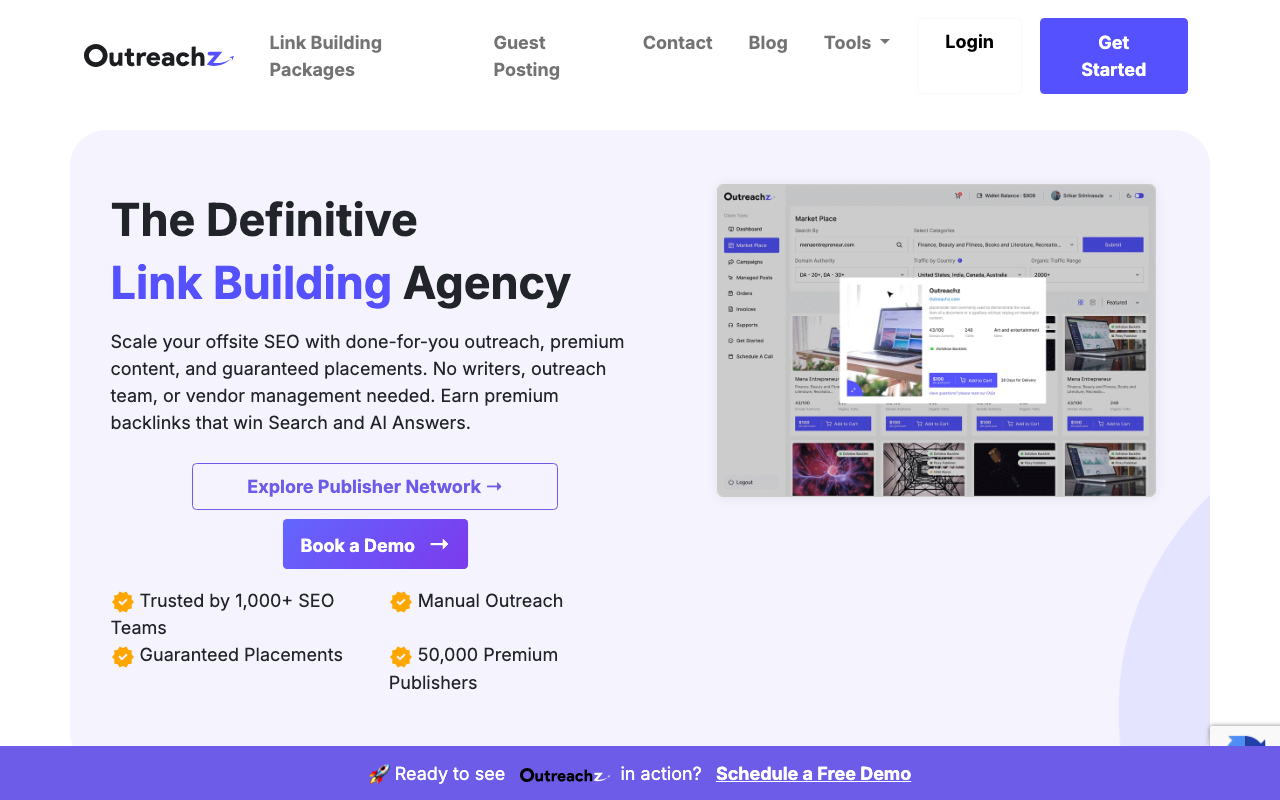
OutreachZ positions itself as a curated marketplace focused on publisher quality over volume. The publisher network is vetted for real organic traffic, editorial standards, and niche relevance before inclusion.
What it does: Vetted publisher database with real traffic verification. Niche-matching between buyer and publisher. Editorial review of submitted content before placement. Reporting on live placements.
Pricing: Pay-per-post. Premium pricing reflects the editorial vetting.
Best for: Teams prioritizing link quality over link volume. If you are in a competitive niche where link quality signals matter — SaaS, finance, legal — OutreachZ’s editorial standards reduce the risk of placing on sites that will not hold their traffic or authority over time.
Limitation: Higher per-placement cost than self-serve alternatives like Adsy. Inventory is smaller by design (quality filtering reduces the number of available publishers). Not the right choice for high-volume bulk link building campaigns.
Other marketplace options worth noting: PRNEWS.IO takes a different angle — it focuses on media outlet placements (news sites and industry publications) rather than niche blog networks, with a pay-per-post model and no subscription commitment. WhitePress.com covers international markets with broad publisher reach and editorial quality controls before listing. Both are useful if your guest posting strategy extends beyond English-language niche blogs.
How to Choose the Right Guest Posting Software
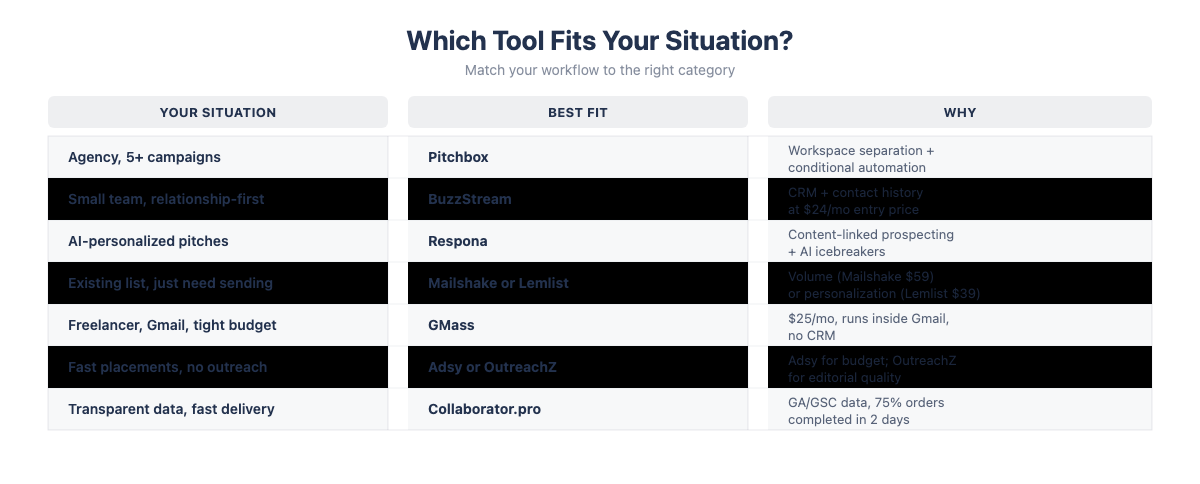
The right tool depends on your workflow, team size, and how many guest posts per month you are placing. Teams that need to manage guest posting campaigns across multiple clients have different requirements than in-house teams placing 10 posts per month. Here is a straightforward decision map:
Agency with 5+ simultaneous campaigns: Pitchbox. The workspace separation, conditional automation, and native SEO tool integrations are worth the $165/mo Pro entry price for agencies billing clients.
Small in-house team (1-3 people), relationship-first approach: BuzzStream Starter at $24/mo. Full CRM, contact history, and email tracking at the lowest entry price in this category.
Content marketer who wants AI-personalized pitches: Respona. The content-linked prospecting and AI icebreakers justify the pay-per-placement model if you are placing 10-20 guest posts per month.
Team with an existing list, just needs sending: Mailshake ($59/mo) for volume or Lemlist ($39/mo) for personalization-heavy campaigns.
Freelancer on a tight budget using Gmail: GMass at $25/mo. Limitations apply (Gmail send limits, no CRM), but it covers the basics.
Need placements fast without outreach overhead: Adsy or OutreachZ marketplace. Adsy for budget-conscious self-serve; OutreachZ for editorial-quality placements.
Want data-transparent marketplace with fast turnaround: Collaborator.pro. Best filtering options and 48-hour delivery rate.
Starting from scratch, low volume, learning the process: Begin with a marketplace (Adsy) to get placements live quickly, then graduate to BuzzStream or Pitchbox once monthly volume exceeds 15-20 pitches.
For guidance on building and executing an outreach strategy around these tools, the outreach strategy guide covers campaign planning, sequence design, and follow-up cadence.
Key Features to Look For in Guest Posting Software
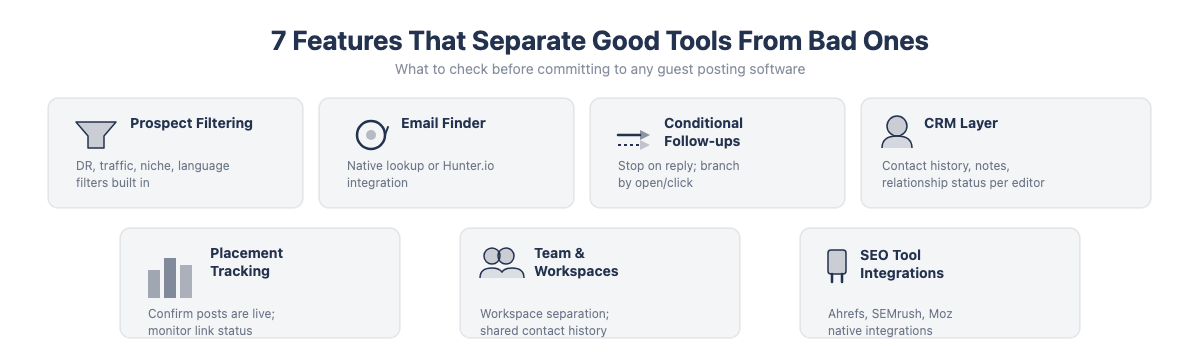
Guest posting software spans a wide range from simple email senders to full blogger outreach tools with CRM, prospecting, and reporting built in. Whether you are evaluating an all-in-one platform or a standalone email tool, these are the features that separate tools that work from tools that create extra work in managing guest blogging outreach:
1. Prospect discovery with filtering: Domain rating, organic traffic, niche, and language filters. Without these, you are manually vetting every site before adding it to your list.
2. Built-in email finder or integration: The ability to go from a target domain to an editor email address without switching tools. Hunter.io integration or a native lookup feature saves significant time per prospect.
3. Email sequence automation with conditional follow-up logic: Follow-ups should stop when a prospect replies. Conditional logic (send follow-up only if not opened) reduces the volume of awkward emails.
4. CRM layer: Contact history, relationship status, and notes per contact. Without this, you lose track of which editors you have worked with before and risk duplicate outreach.
5. Placement tracking and reporting: The ability to confirm that a guest post actually went live and track the link status over time. Many teams skip this and discover months later that placements were removed.
6. Team access and workspace separation: Essential for agencies. Without workspace separation, campaigns from different clients mix in the same interface.
7. SEO tool integrations: Native integrations with Ahrefs, SEMrush, or Moz eliminate manual metric lookups during prospecting.
Common Mistakes When Using Guest Posting Software
1. Over-automating the pitch. Software makes it easy to send 500 identical emails. Editors recognize automated pitches immediately and delete them. The highest-performing guest posting campaigns send fewer emails with higher personalization, not more emails with lower acceptance rates.
2. Skipping prospect list qualification. Importing any list into your outreach tool without filtering by DR, traffic, and niche relevance wastes outreach capacity and risks placements on low-value or penalized sites. Quality filtering before outreach is not optional.
3. Treating follow-ups as optional. Most guest post acceptances come after the second or third email. A single cold pitch has a much lower acceptance rate than a three-step sequence with a politely persistent follow-up. Configure your sequences before starting any campaign.
4. Not confirming placements are live. Editors commit to publishing and then delay or forget. Set a reminder to check whether each placed article is live 2-4 weeks after submission. Many teams discover placment gaps months later when running backlink audits.
5. Running too many tools without integration. Using Ahrefs for prospecting, Hunter for contacts, Gmail for sending, and a spreadsheet for tracking creates data silos. Reporting breaks down, team members duplicate outreach, and placement history gets lost. Consolidate tools or at minimum use a CRM to connect them.
For a broader look at how guest posting fits into a full link building operation, the backlink outreach guide covers the end-to-end workflow.
Frequently Asked Questions
What is guest posting software?
Guest posting software is a category of tools that manage one or more stages of a guest posting campaign: finding relevant sites, locating editor contacts, sending personalized pitch emails, following up, and tracking which placements go live. The category includes all-in-one outreach platforms like Pitchbox and BuzzStream, standalone email sending tools like Mailshake, prospecting tools like Ahrefs Content Explorer and Hunter.io, and guest posting marketplaces like Adsy and OutreachZ.
What is the difference between guest posting software and a guest posting marketplace?
Guest posting software means you run the outreach yourself: you find the sites, write the pitches, send the emails, and manage the relationship. A guest posting marketplace does that work for you: you browse a curated publisher network, pay per placement, and submit content. Software gives you more control and lower per-placement costs at scale; a marketplace gives you faster placements without the outreach infrastructure.
Is Pitchbox worth the cost for guest posting?
Pitchbox at $165/mo Pro is worth the cost for agencies running five or more simultaneous guest posting campaigns across multiple clients. The conditional automation, workspace separation, and native SEO tool integrations save significant operational time at that scale. For in-house teams running one or two campaigns per month, BuzzStream at $24/mo Starter covers the same core workflow at a fraction of the price.
Can I do guest posting without paid software?
Yes, you can run a full guest posting campaign without paying for software by combining free search operators, a free email lookup plan and your existing inbox. Search Google with an operator such as "write for us" + your topic or inurl:"write-for-us" + your topic to surface sites that publish guest content in your niche, then run each result through Hunter.io’s free plan (50 credits per month) to find editor emails, and send from Gmail. This covers around 20-30 outreach emails per month before you hit plan limits. Once monthly volume exceeds that, a paid tool becomes cost-effective.
How many guest posts per month can I manage with BuzzStream?
The Starter plan ($24/mo) supports 1 user and 1,000 contacts. The contact limit applies to your stored contact database, not your monthly email volume. For most guest posting campaigns, the Starter plan is sufficient up to 30-50 pitches per month. The Growth plan ($124/mo, 3 users, 25,000 contacts) supports full agency-scale operations.