

Most teams don’t need a single platform that does everything. They need a 2-to-3 layer stack: one tool for backlink research and monitoring (Semrush, Ahrefs, Majestic), one for outreach execution (BuzzStream, Pitchbox), and sometimes one supporting layer for contact discovery (Hunter). The real question isn’t which tool has the longest feature list. It’s which step is slowing the campaign down right now.
Good link building software removes a specific bottleneck. It speeds up research, keeps outreach organised, and makes it easier to see what’s working. What it doesn’t do is replace judgment about which sites are worth contacting or whether your pitch is any good. Keep that boundary clear.
This guide covers eight tools across the four main link building jobs — research, outreach, contact discovery, and monitoring — with verified pricing, key features, and a clear use-case verdict for each.
What is link building software?
Link building software is the set of tools teams use to research prospects, manage outreach, verify contacts, and monitor link outcomes. It helps most when it removes repetitive workflow friction, but it doesn’t replace relevance, judgment, or editorial fit.
In practice, link building software handles four main jobs: prospecting and list building, contact discovery, outreach workflow and follow-up, and backlink monitoring with reporting support. The strongest stacks split those jobs cleanly — they don’t try to squeeze all four into a single product equally well.
- Prospecting and list building
- Contact discovery and verification
- Outreach workflow and follow-up management
- Backlink monitoring and reporting
Where software helps most:
- Researching realistic prospects faster than manual search allows
- Keeping outreach follow-up and contact ownership organised
- Spotting link gains, losses, and reporting gaps earlier
Where software doesn’t replace the team:
- Deciding whether a site is genuinely relevant and worth pursuing
- Writing outreach that feels specific and credible
- Judging whether a link is worth the relationship cost
Prospecting and list building
Prospecting tools help you decide which sites and pages are worth contacting. They’re the options that let you analyse competitor backlink profiles, identify link gaps, and build a qualified prospect list before any outreach starts.
Outreach and relationship management
Outreach workflow software matters most here. If your team is managing pitches, follow-ups, notes, and contact ownership across inboxes and spreadsheets, the right platform saves hours every week. Automation handles process; quality control doesn’t automate as cleanly.
Backlink monitoring and reporting
Backlink tools and outreach platforms both contribute to reporting. One side shows what links appeared, disappeared, or changed. The other shows what happened inside the campaign: who replied, who needs follow-up, and where execution is getting stuck. Strong reporting starts when those two views aren’t merged into a single noisy dashboard.
How to choose link building software
Before comparing vendors, answer four buying questions. A clear bottleneck diagnosis is a better shortlist filter than reading ten feature comparison tables — it’s usually faster too.
Start with the bottleneck, not the feature list
If your team can’t find enough relevant sites, start with prospecting and backlink research. If outreach is chaotic, start with a workflow platform. If campaigns are running but nobody trusts the updates, fix reporting structure before adding more software. Fix the biggest friction first — don’t add more tools on top of an unsolved bottleneck.
Check the data quality before you buy the workflow
The cleanest outreach workflow is still weak if the research data underneath it’s unreliable. Backlink platforms live or die on index quality and crawl freshness. Outreach platforms live or die on workflow fit and how easy they make it to keep campaigns moving without manual chasing.
Match reporting depth to the audience
Operators need a working view; leadership needs a summary. A good stack makes it easy to see day-to-day movement without forcing stakeholders to navigate the same noisy dashboard. If a tool creates a detailed working view but no clean summary layer, the reporting burden just moves elsewhere. Moving the burden isn’t the same as eliminating it — the team’s still doing the work, it’s just in a different place.
Budget for the full stack, not the flashiest tool
Most teams only need 2 to 3 tools, not a bloated all-in-one purchase. One tool owns backlink intelligence, one owns outreach workflow, and a third only earns its place when contact discovery is clearly the bottleneck. Budget for the operating model, not the most impressive demo. It’s a more honest framing for purchase decisions — and it’s easier to defend internally too.
A quick buying filter — ask these four questions before you shortlist anything:
- Which team member uses this tool every day?
- Which job becomes easier in the first two weeks?
- What existing spreadsheet or manual step should disappear?
- Which other system should remain the source of truth after the purchase?
Quick comparison — best link building software
The table below covers eight tools across the main link building job categories. Starting prices shown are for the entry-level paid plan, billed monthly, verified from vendor pricing pages in April 2026.
| Tool | Best for | Primary role in the stack | Starting price | Main weakness |
|---|---|---|---|---|
| Semrush | SEO teams that want backlink research and monitoring inside a broader toolset | Backlink research, monitoring, reporting support | $139/month | Not the strongest dedicated outreach workflow |
| Ahrefs | Teams that care most about backlink research and competitive discovery | Backlink analysis, prospecting support | From ~€119/month | Needs a separate outreach system |
| Moz Pro | Teams wanting backlink analysis with Domain Authority context at a lower entry price | Backlink analysis, DA scoring, link prospecting | $49/month | Smaller backlink index than Ahrefs or Semrush |
| Majestic | Teams that want raw link intelligence data with Trust Flow and Citation Flow | Backlink data, link quality scoring | From ~€47/month | Specialist tool — no outreach or keyword features |
| BuzzStream | Teams that need an outreach CRM without heavy enterprise overhead | Outreach workflow, relationship management | $49/month | Lighter research layer than dedicated backlink tools |
| Pitchbox | Larger outreach programs with more process control and automation at scale | Outreach automation, campaign operations | $300/month | Heavier setup — can feel oversized for smaller teams |
| Hunter | Teams that mainly need contact discovery and email verification | Email discovery, verification | Free + from ~€49/month | Support layer, not a full link building stack |
| Respona | Teams that want done-for-you link placements rather than self-service software | Managed link placement service | From $100/placement | Not self-service software — works as a managed service |
The table isn’t meant to pick a winner. It’s meant to narrow your shortlist. If research depth is the main problem, Semrush and Ahrefs deserve the first look. If outreach execution is the bottleneck, BuzzStream and Pitchbox are more relevant. Hunter belongs in the conversation only when contact discovery is the specific weak point. Use it to narrow before you’ve committed to comparing tools in detail.
Best link building software by use case
Semrush — backlink intelligence and monitoring inside a broader SEO stack
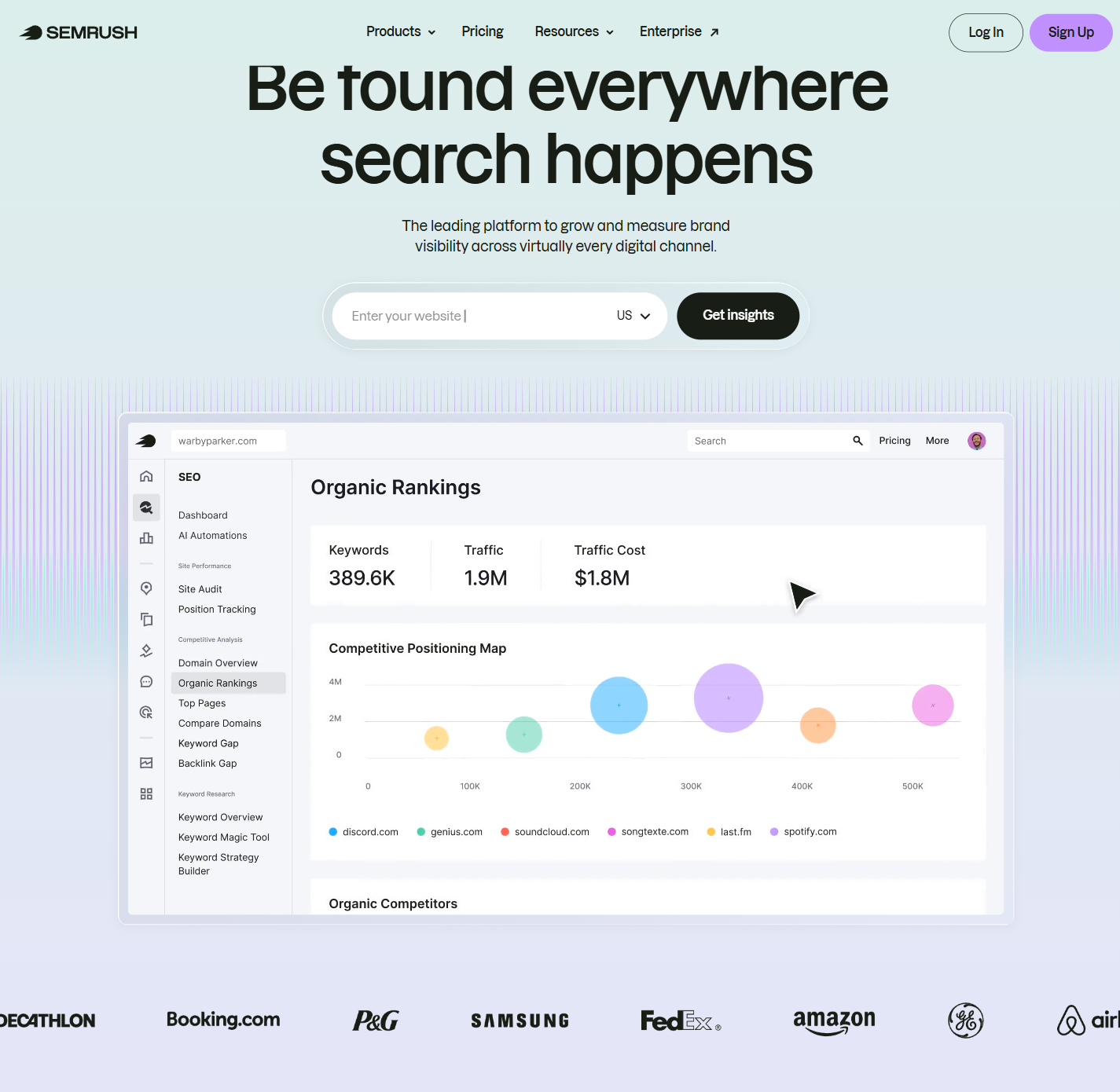
Semrush is the strongest fit when link building sits inside a broader SEO program. The backlink database, competitor gap analysis, and monitoring tools give SEO teams a single platform for research, tracking, and stakeholder reporting — they don’t need to stitch together separate products to get that view.
Its biggest advantage is context. Teams that already use Semrush for keyword research and site audits don’t need to bolt link decisions onto an unrelated toolset. Research, monitoring, and broader search visibility stay in the same operating view, which often makes stakeholder updates easier even when outreach happens elsewhere. There’s no extra integration work required.
Key features for link building:
- Backlink Analytics and Gap tool for competitive research
- Link Building Tool with built-in prospect and outreach workflow
- Backlink monitoring with gain/loss alerts
Choose Semrush if:
- Link building sits inside a wider SEO workflow
- You want research and monitoring in the same platform
- Stakeholder reporting benefits from one unified SEO toolset
Skip Semrush if:
- Your main bottleneck is outreach operations, not research
- You need a dedicated CRM-style workflow for pitches, follow-ups, and contact ownership
Pricing: Pro plan from $139/month. Annual billing is discounted on Semrush’s pricing page.
Ahrefs — backlink research and competitive discovery
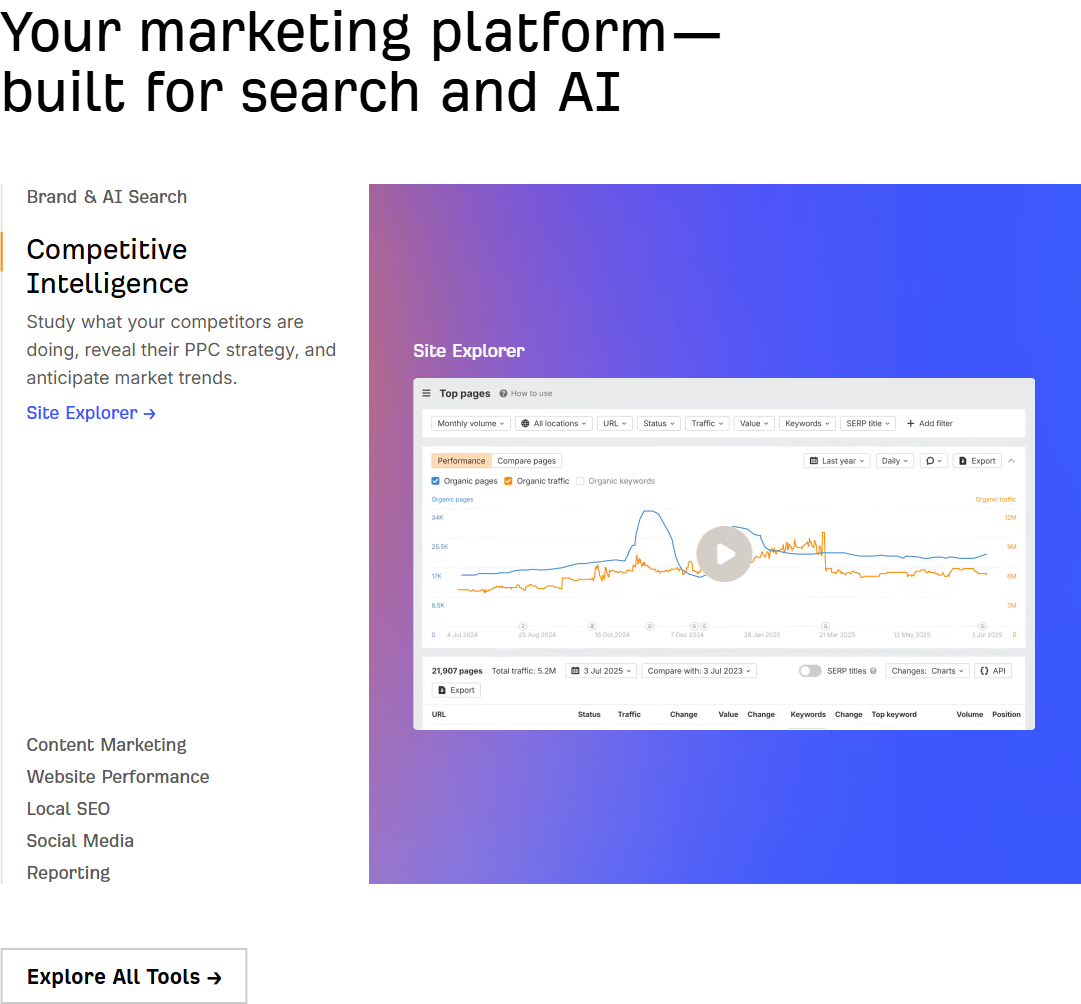
Ahrefs is strongest when the main job is backlink intelligence. If you need to understand who links to competitors, which pages attract links, and where your profile isn’t performing well enough, it’s one of the clearest shortlist candidates. The Site Explorer, Link Intersect, and Content Explorer features make the planning stage of a campaign considerably faster.
This focus makes Ahrefs especially useful when building a prospect universe before worrying about process tooling. Research depth matters more at this stage than having native outreach controls in the same product, and it’s a trade-off most research-first teams are comfortable making.
Key features for link building:
- Site Explorer for deep competitor backlink analysis
- Link Intersect to find sites linking to competitors but not you
- Ahrefs Webmaster Tools (free) for basic site monitoring
Choose Ahrefs if:
- Campaign planning starts with research depth and prospect discovery
- Competitor backlink analysis is central to your workflow
- Your outreach process already exists and needs better inputs
Skip Ahrefs if:
- You want one tool to run outreach workflow as well
- You need clearer campaign-management and follow-up controls inside the same product
Pricing: Lite plan from approximately €119/month. A limited free version is available through Ahrefs Webmaster Tools.
Moz Pro — backlink analysis with Domain Authority context
Moz Pro is a solid entry point for teams that want backlink analysis and domain quality scoring without paying for a full-suite platform. It’s not as deep as Ahrefs or Semrush, but it doesn’t need to be at this price point. Its Domain Authority metric has become a widely used benchmark for evaluating link targets, and the Link Explorer gives a workable view of any site’s backlink profile.
The Spam Score feature is genuinely useful for filtering prospects — it flags potentially toxic links before they make it into your outreach queue, and that’s time saved at the vetting stage. For teams new to backlink analysis or working within a tighter budget, Moz Pro covers the essential research layer without the cost of Ahrefs or Semrush.
Key features for link building:
- Link Explorer for backlink profile analysis
- Domain Authority and Spam Score for prospect vetting
- Link Intersect to identify competitor-only link sources
Choose Moz Pro if:
- You want backlink analysis at a lower entry price than Ahrefs or Semrush
- Domain Authority scoring is a useful benchmark for your team or clients
- Spam Score filtering would improve your prospect vetting workflow
Skip Moz Pro if:
- You need the largest possible backlink index for deep competitive research
- You want outreach features inside the same platform
Pricing: Starter plan from $49/month ($39/month billed annually). A 7-day free trial is available.
Majestic — specialist backlink data with Trust Flow and Citation Flow
Majestic is built entirely around backlink data. It doesn’t try to cover keyword research or site audits — a deliberate design choice, not a gap. That focus shows in the depth of its link intelligence, particularly the Trust Flow and Citation Flow metrics, which give a more nuanced picture of link quality than a single authority score.
Trust Flow measures the quality of links based on proximity to trusted seed sites. Citation Flow measures the quantity and power of links pointing to a page. Together, they’re a useful complementary view to Domain Authority or Domain Rating for teams doing serious link quality vetting.
Key features for link building:
- Trust Flow and Citation Flow for granular link quality analysis
- Historical backlink index to track how profiles evolved over time
- Site Explorer with Trust Flow threshold filtering for prospect vetting
Choose Majestic if:
- Link quality vetting is a central part of your workflow
- You want a specialist data layer that complements a broader SEO tool
- You need historical backlink data at a reasonable price point
Skip Majestic if:
- You need keyword research, site auditing, or outreach features in the same tool
- A single authority metric is sufficient for your link vetting needs
Pricing: Lite plan from approximately €47/month. Annual billing is available at a lower monthly rate.
BuzzStream — outreach CRM and relationship management
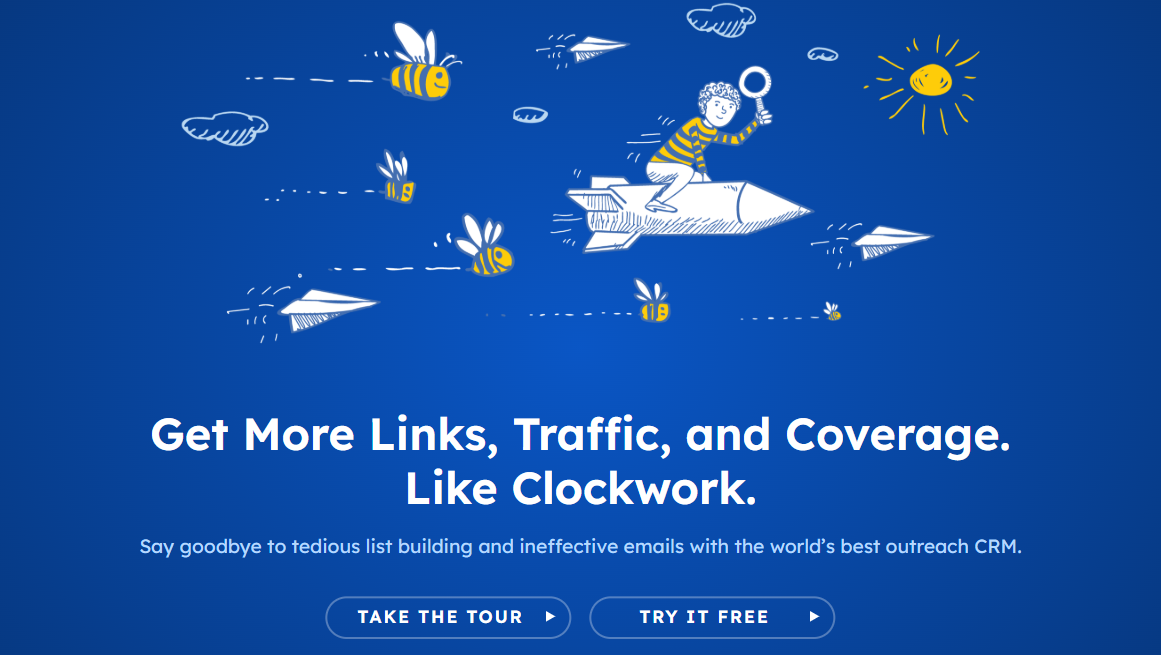
BuzzStream is built around outreach operations rather than backlink data. It’s valuable when the real pain point is campaign organisation: contacts, templates, follow-ups, notes, and ownership. For teams where outreach is currently scattered across inboxes and spreadsheets, BuzzStream provides the structure without forcing them into a heavier enterprise process before they’re ready for it.
The focus on relationship management is what makes it different from heavier automation platforms. It’s designed to help smaller teams run campaigns consistently, track conversation history, and hand off contacts cleanly between team members. For most smaller teams, it’s the more practical upgrade when outreach is scattered but volume isn’t high enough for enterprise tooling.
Key features for link building:
- Outreach CRM with contact history and relationship tracking
- Email sequencing with follow-up automation
- Team collaboration with contact ownership and campaign status tracking
Choose BuzzStream if:
- Your outreach process still lives across inboxes and spreadsheets
- Relationship management matters more than heavy automation
- You want a practical workflow system without a large setup burden
Skip BuzzStream if:
- You expect the same research depth as Semrush or Ahrefs
- You need a heavier multi-user outreach engine with more process layers
Pricing: Starter plan from $49/month for 1 user and 500 contacts. Growth plan is $174/month for 3 users and 25,000 contacts.
Pitchbox — larger outreach programs with more process control
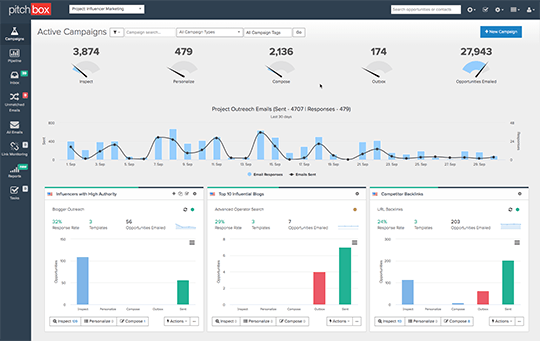
Pitchbox is a better fit when outreach has already become a full operational system. It’s built for teams that need more structure around prospecting, campaigns, workflow control, and follow-up at scale. The platform can automatically discover outreach opportunities based on keywords and campaign type, then enrich those prospects with contact information and site metrics.
Pitchbox makes more sense once the outreach function has enough volume and enough owners that lighter systems start to strain. Its follow-up sequences are designed to send at optimal intervals to contacts who haven’t responded, which consistently improves response rates on larger campaigns. It earns its price once the volume’s there to justify it.
Key features for link building:
- Automated prospect discovery with keyword and campaign-type filtering
- Personalisation engine with intelligent follow-up sequencing
- Campaign performance reporting with team collaboration controls
Choose Pitchbox if:
- Several people are involved in campaign operations
- Outreach requires tighter process control and structured automation
- Scale matters more than keeping the stack lightweight
Skip Pitchbox if:
- Your team is small and a simpler CRM-style system is sufficient
- Heavier process layers would add friction rather than remove it
Pricing: Pro plan from $300/month ($210/month billed annually) for 2 users. Advanced plan is $600/month ($420/month annual) with unlimited users and 5,000 outreach emails per month.
Hunter — contact discovery and email verification
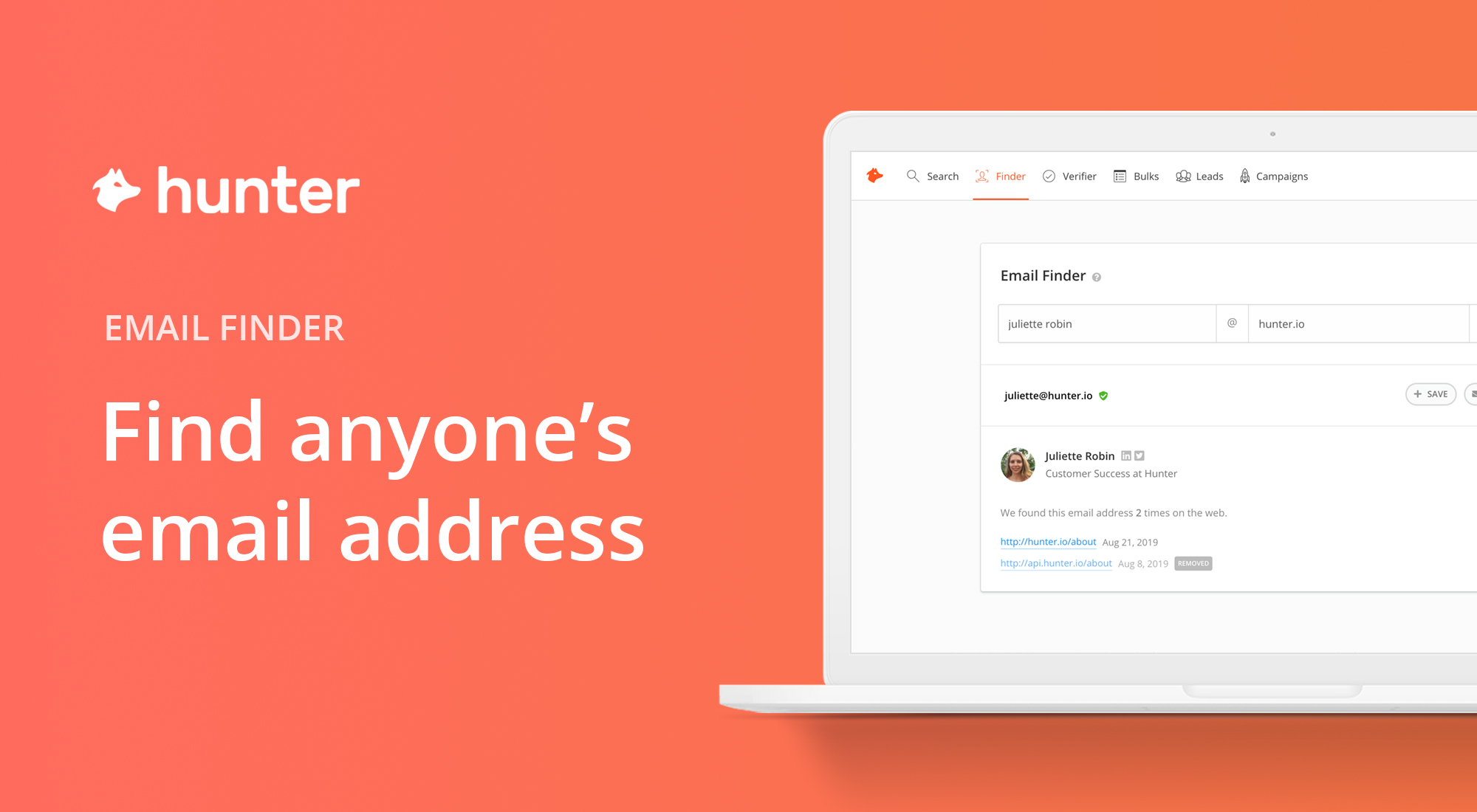
Hunter isn’t the full answer to link building on its own, but it’s one of the most reliable support tools in the stack. The Email Finder locates professional email addresses associated with any domain, returns a confidence score for each result, and the verification system checks deliverability before you send anything. It’s a focused tool built for one job, and it does that job well.
Teams often waste hours on contact lookup and verification inside a process that otherwise works. Hunter’s designed for exactly that bottleneck — it’s not trying to replace the stack, it’s trying to unblock one specific stage of it.
Key features for link building:
- Email Finder by domain or person name with confidence scoring
- Bulk verification to check deliverability before sending outreach
- Domain Search to identify email patterns and multiple contacts per organisation
Choose Hunter if:
- You already know who you want to reach and need cleaner contact data
- Email verification is slowing campaign preparation down
- You want a focused support layer rather than another broad platform
Skip Hunter if:
- You need campaign management, reporting, or backlink analysis
- You’re looking for a full operating system rather than one support function
Pricing: Free plan includes 50 credits per month. Starter plan from approximately €49/month for 2,000 credits, with a 30% discount on annual billing.
Respona — done-for-you link placement service
Respona is worth knowing about, though it no longer operates as self-service link building software. As of 2026, Respona has pivoted to a managed link placement service: you specify your requirements and Respona’s team handles prospecting, outreach, content, and placement. Pricing is per link placed rather than a monthly software subscription. The model has changed fundamentally from what it once was.
If you’re comparing software options for your own team to operate, Respona isn’t in that category. If you’re evaluating managed services alongside self-service tools, it’s worth including in that conversation — placements start from $100 for sites with Domain Rating 20+ and go up to $500 for DR 60+ editorial placements.
Choose Respona if:
- You want done-for-you link placements without managing the outreach process yourself
- Speed of execution matters more than building an in-house outreach capability
Skip Respona if:
- You’re looking for self-service outreach software with a monthly subscription
- You want full control over the prospecting, messaging, and outreach workflow
Pricing: From $100 per placement (DR 20+). No monthly SaaS subscription — pricing is per link placed.
What a practical link building stack looks like
Most teams can start with 2 layers and add a third only when the workflow proves it’s necessary. That’s usually enough: one research layer, one outreach layer, and a third only if contact verification is clearly slowing the team down.
A lean stack for small teams
- One research layer for backlink intelligence and prospect discovery
- One outreach layer for execution, ownership, and follow-up
- One supporting contact layer only if verification is the actual bottleneck
A simple example:
- You’ll want Semrush or Ahrefs to identify prospects and monitor backlink movement
- BuzzStream’s the right outreach tool for smaller programs that don’t need heavy automation
- Move to Pitchbox when the outreach function grows and needs more process control
- Add Hunter when contact discovery is clearly slowing campaign preparation
A broader stack for agencies or multi-client teams
Larger teams need the same core layers, but the operating model is less forgiving. There’s more room for bottlenecks to compound. More owners, more campaigns, and more reporting handoffs raise the cost of a lightweight workflow that nobody governs clearly.
- Semrush or Ahrefs still own research and monitoring — that’s the layer you don’t want to compromise on
- Pitchbox handles heavier outreach workflow and campaign control across multiple accounts
- Hunter’s the support layer when verification volume is high
- Reporting rolls up into one agreed summary view rather than living in every tool at once
This is also where reporting clarity matters most. One tool owns link outcomes, one tool owns campaign movement, and the summary becomes much cleaner when those roles are clear. The guide on link building reporting covers what to track and how to present it.
For teams running link building as part of a broader SaaS growth strategy, link building for SaaS covers the tactical differences that apply when your target sites and editorial standards are different from a standard niche approach. And if you’re evaluating what a successful link building campaign actually looks like in practice, the link building case study walks through a real example.
FAQ
What is the best link building software overall?
There’s no single tool that’s the best choice for every team. The right answer depends on which job needs the most help first: backlink research and monitoring (Semrush, Ahrefs), outreach workflow management (BuzzStream, Pitchbox), or contact discovery (Hunter). Start with the bottleneck.
Do you need more than one link building tool?
Most teams need more than one tool. One handles backlink intelligence, another handles outreach workflow. The mistake is buying overlapping platforms without deciding which one is the source of truth for each job — two to three tools is usually the right range. That’s the normal configuration, not a sign the stack’s overbuilt.
Which tool is best for outreach?
BuzzStream suits smaller teams needing a structured CRM for pitches, follow-ups, and contact history. Pitchbox is better for larger teams or agencies running outreach at scale with more process control and automation. Team size and campaign volume are the deciding factors — it’s that straightforward.
Which tool is best for reporting?
Semrush and Ahrefs are the strongest options for monitoring link outcomes — gains, losses, and backlink profile changes. An outreach tool like BuzzStream or Pitchbox supplies the campaign context: who replied, who needs follow-up, and where execution is stalling. The bigger win comes from deciding which metrics belong in the summary and which stay in the working view.
What is the most affordable link building software?
Moz Pro Starter ($49/month) and Hunter’s free plan are the lowest-cost entry points among the tools reviewed here. Hunter is free up to 50 credits per month, which is enough for small outreach lists. Moz Pro Starter covers basic backlink analysis and Domain Authority scoring at $49/month or $39/month billed annually.
Is there free link building software?
Hunter.io has a free plan (50 email credits per month), and Ahrefs Webmaster Tools is free for basic site monitoring. Neither is a complete link building solution, but they’re useful starting points for teams with limited budgets before committing to a paid stack.
The best link building software is usually a 2-to-3-layer stack that fixes the biggest bottleneck first. Start with research if you can’t find enough strong prospects, start with workflow if outreach is chaotic, and add a support layer only when the process proves you need it. The strongest buyers decide which tool owns research, which owns execution, and which stays the source of truth for reporting.