

Most outreach tactics start cold: you pitch a stranger and ask for something they get nothing back for. Testimonial link building works the other way around. You already use the product, so the vendor already has a reason to say yes, and the link usually lands on a homepage instead of a buried blog post.
That’s why it has one of the highest acceptance rates of any white hat tactic. This guide covers exactly what counts as testimonial link building, why it works for SEO, and the steps to run it yourself.
What Is Testimonial Link Building?
Testimonial link building is a white hat SEO strategy where you share honest feedback about a product or service you use, and the vendor places that testimonial on their website with a link back to your domain. You identify tools or services your business relies on, write an authentic review of the results you got and submit it to the company. If they publish it with a link to your site, you’ve earned a high-authority backlink with minimal content investment.
The mutual value makes this a natural link building tactic in the way Google defines it. Companies benefit because real testimonials from verifiable businesses are more convincing than anonymous reviews. They’re harder to fabricate too. Testimonials that include the reviewer’s name, company and a link to their website read as credible social proof, which is exactly why vendors are willing to add the link back.
Testimonial link building isn’t a grey area tactic. Its links are placed at the discretion of the linking site, they reflect a real relationship between two businesses and the reviewer genuinely used the product. All three of those factors describe what Google considers a natural link. Indeed, it’s one of the few outreach tactics that fits Google’s definition outright.
Why Testimonial Link Building Works for SEO
Testimonial links earn their place in a link building strategy because they reliably deliver high-authority placements with a higher acceptance rate than most outreach methods, and they drive referral traffic on top of ranking improvements.
You Earn Links From High-Authority Pages
Testimonial links typically land on product homepages or dedicated testimonials pages, which pass more link authority than a blog post buried three levels deep in a site’s architecture. Homepages hold the most link equity on a domain. They’re the top of the hierarchy, and a placement there carries real weight.
For companies with strong brand authority, the domain rating on those homepages can reach DR 60 to DR 90 or higher. A single homepage testimonial link from a well-established software tool is worth more than several mid-tier blog placements from guest posts on newer sites. SEO consultant Matthew Woodward’s video testimonial for the WordPress theme company MyThemeShop is a commonly cited example: it still runs on the company’s testimonials page today, linking back to his site from a domain currently rated DR 82.
The Acceptance Rate Is Higher Than Most Outreach
Testimonial outreach has a higher acceptance rate than most other link building tactics because you’re offering something the vendor already wants. A broken link building pitch requires you to explain a problem with someone’s website. A guest post pitch requires convincing an editor that your content belongs on their blog.
A testimonial pitch is different. You’re not asking for a favour, you’re offering a genuine endorsement that makes their product page more persuasive to potential buyers. That’s why vendors respond far more readily to testimonial requests than to most other outreach types.
It Builds Real Business Relationships
Testimonial link building creates real B2B relationships, not just backlinks. Without question, a published testimonial opens a more lasting connection than cold outreach. Some companies share testimonials on social media and tag the reviewer’s business. Others become referral sources or mention you in newsletters. That doesn’t happen with most link types. Those outcomes extend the value of a single outreach effort well beyond the link itself.
It Drives Referral Traffic, Not Just Rankings
Testimonial links drive high-intent referral traffic because they appear where potential buyers are actively evaluating products. Research by BrightLocal found that 85% of consumers say positive reviews make them more likely to use a business, and close to half trust online reviews as much as recommendations from people they know. Vendors place testimonials on their pages for exactly that reason, which means your link sits in front of readers who are already in a buying mindset.
How to Build Testimonial Links (Step by Step)
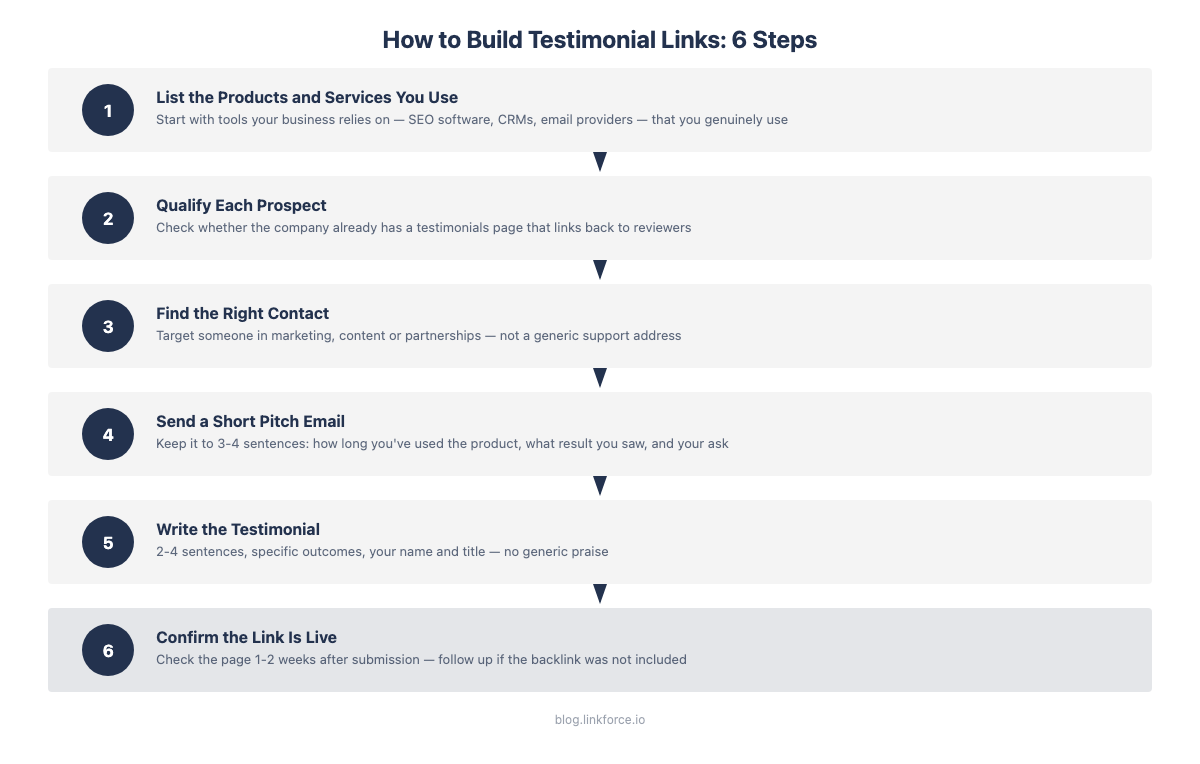
Building testimonial links requires six steps: identify products you genuinely use, qualify each prospect, find the right contact, pitch your testimonial, write a compelling review then confirm the link is live.
Step 1: List the Products and Services You Use
Start with the tools your business relies on. SEO software, CRM platforms, project management tools, email providers, payment processors, hosting providers, anything you have a genuine positive experience with. Authenticity matters here, both ethically and practically. A fabricated testimonial is easier to spot and far less convincing than a real one.
Focus on tools in the same or adjacent industries to yours. A testimonial on a PR platform carries more topical relevance for an SEO agency than a testimonial on a generic accounting tool, even if both domains have similar domain ratings. Relevance matters, but domain rating matters too.
Step 2: Qualify Each Prospect
Not every company publishes testimonials with backlinks. Before writing anything, check whether the company already has a testimonials or case studies page that links back to customers’ websites.
Visit their homepage and look for a social proof section. If you see testimonials with “Jane Smith, CEO of Company Name” and the company name is a clickable link, you’ve found a confirmed backlink opportunity. If their testimonials page has no links, reach out to ask. Many companies will add them if asked, but confirmed backlink pages are always the higher-priority target.
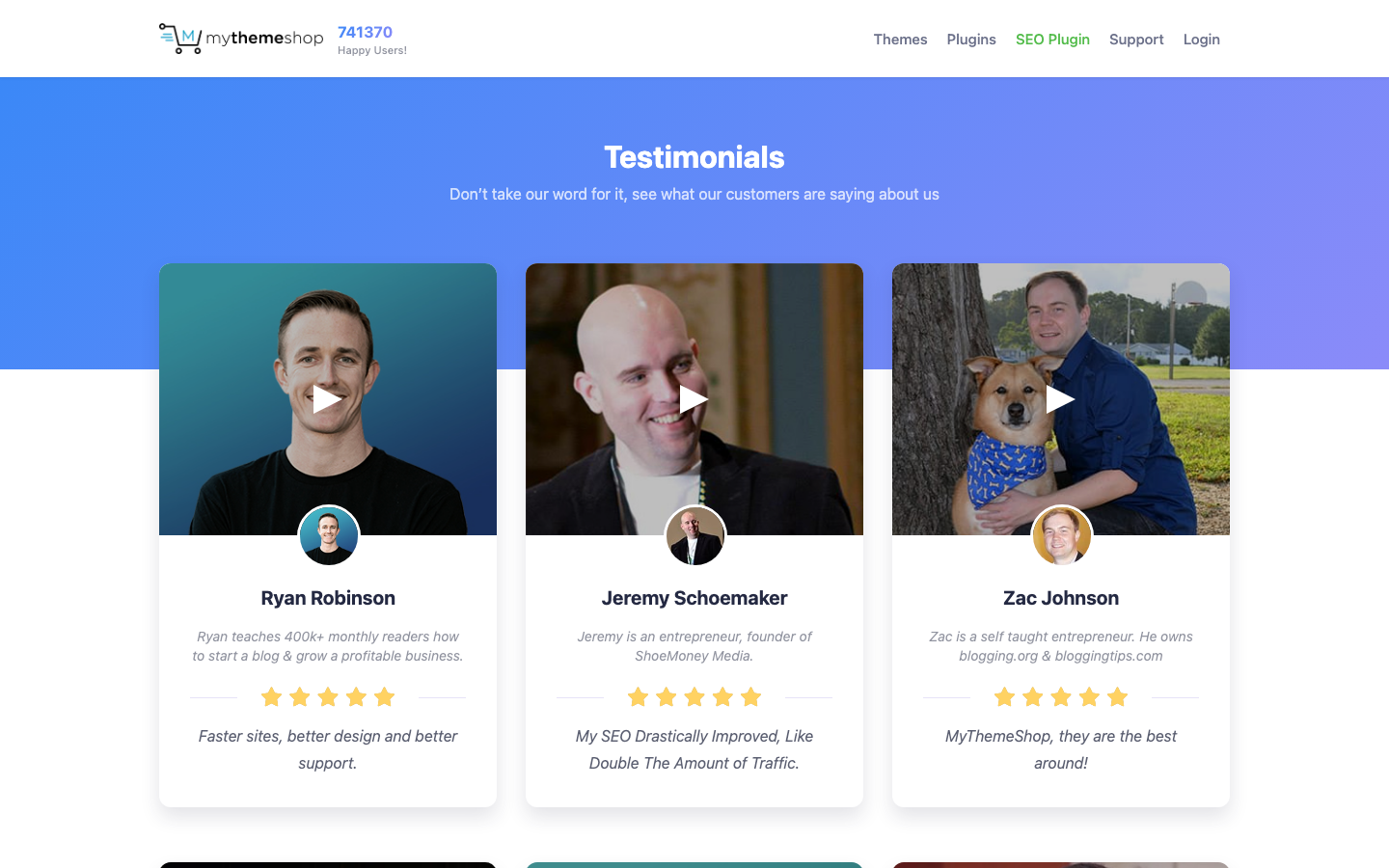
Companies that already link to reviewers have made the decision to provide backlinks. They’ve already committed. You’re not negotiating anything new with them.
Step 3: Find the Right Contact
Send testimonial pitches to a person, not a generic support address. You want someone in marketing, content or partnerships: whoever manages the website’s social proof section.
Check the company’s website for a team page or LinkedIn. Search for “Head of Marketing” or “Content Manager” at the company. Tools like Hunter.io, FindThatLead and Voila Norbert all offer a free tier that lets you find email addresses associated with a domain, which is useful when the right contact isn’t obvious from the site. Put in the company’s URL and the role you’re after, and any of the three will return a likely match.
The goal is to reach someone who understands the value of your testimonial and who’ll actually publish it. A support ticket routed through the wrong queue gets buried. Period.
Step 4: Send a Short Pitch Email
Your outreach email shouldn’t run longer than three or four sentences. Mention how long you’ve been using the product, what specific result you’ve seen and that you’d like to submit a testimonial if they accept them. Don’t over-explain.
A workable structure:
Hi [Name], I’ve been using [Product] for [timeframe] and it’s made a real difference to [specific outcome]. I’d love to write a short testimonial if you feature them on your site, whether that’s a customer reviews page or a case studies page. Happy to include my name, title and a link to [your site] if that’s useful for you.
Keep it conversational. The pitch itself should feel like a genuine offer, not a formulaic outreach template.
If you don’t hear back within three to five days, send one short follow-up. People miss emails or mean to reply later and forget. A single line works: “Just following up in case this got buried, happy to send the testimonial over whenever suits.” Two follow-ups spaced two to three days apart is usually enough; beyond that, move on and pitch a different company instead.
Step 5: Write the Testimonial
Once they respond positively, write a testimonial that’s specific, results-focused and short. Two to four sentences is the sweet spot. Generic praise like “Great product, highly recommend!” won’t get featured. Specific outcomes are what companies want to show potential customers.
A strong testimonial for link building includes:
- A concrete result or outcome (time saved, revenue increased, rankings improved)
- A reference to the specific feature or service that drove it
- Your name, job title and company name
- Optionally, a photo
The difference shows up fast once you compare two versions side by side. “Great tool, highly recommend it!” gives the vendor nothing to work with and rarely gets published. “We cut our reporting time from six hours a week to under one using [Product]’s automated exports, and it paid for itself in the first month” names a real outcome, so it gets featured.
Video testimonials are worth considering if you have the equipment. They’re harder to produce, but many companies prioritize them because they convert better on landing pages and give you additional visibility when the company shares them on social channels.
Step 6: Confirm the Link Is Live
After you’ve submitted the testimonial, allow a week or two for publication. Then check the page to confirm your testimonial is live and the link to your site is included.
If the testimonial is published without the backlink, follow up politely: “Thanks for publishing the testimonial. I noticed the link to my site wasn’t included, and adding it would help visitors verify who I am.” Most companies will fix this without issue, although it’s worth having that follow-up ready before you submit.
Track the live links in a spreadsheet with the URL, the target page, the anchor text used and the date it went live. This makes it easy to monitor if links are later removed or changed.
Tips for Getting Your Testimonials Accepted and Published
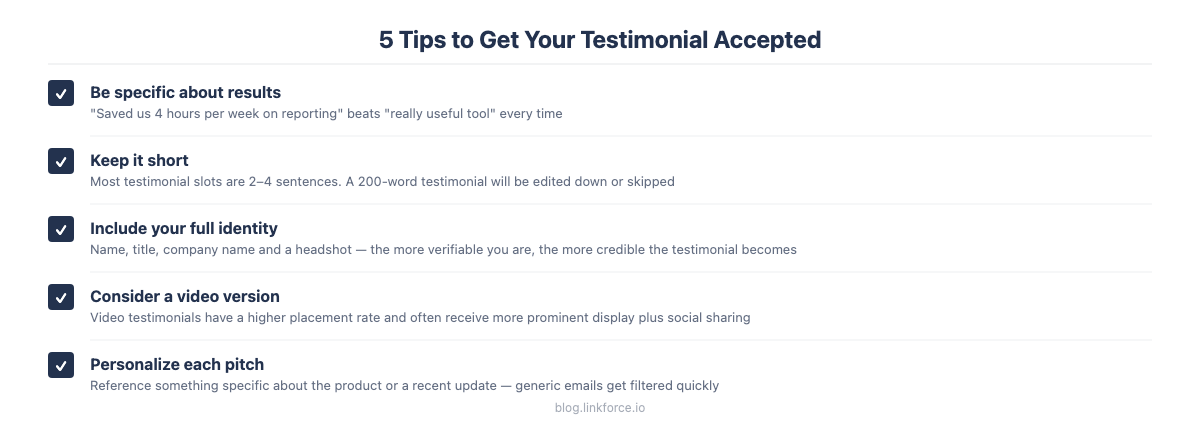
The most effective testimonials are specific, short and verifiable. Here are the practical factors that improve acceptance and placement rates.
- Be specific about results. “Saved us 4 hours per week on reporting” beats “really useful tool” every time. Quantified outcomes are what companies want to display to potential buyers.
- Keep it short. Most testimonial slots are 2 to 4 sentences. A 200-word testimonial will likely be edited down or skipped entirely.
- Include your full identity. Your name, title, company name and ideally a headshot. The more verifiable you are, the more credible the testimonial product becomes for the vendor’s page.
- Consider a video version. Video testimonials have a higher placement rate and often receive more prominent display, plus social media exposure when the company shares them.
- Personalize each pitch. Reference something specific about the product or a recent update. Generic outreach emails get filtered quickly by anyone managing a busy marketing inbox.
How Testimonial Link Building Compares to Other White Hat Tactics
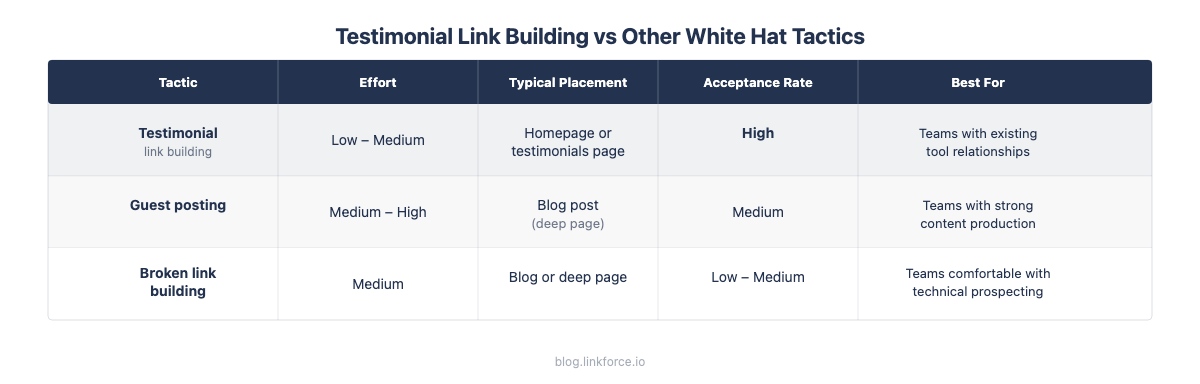
Testimonial link building sits in a useful niche relative to other tactics in a broader white hat link building strategy. It delivers homepage-level links with lower effort than guest posting and it has a better acceptance rate than broken link building.
| Tactic | Effort Level | Typical Link Placement | Acceptance Rate | Best For |
|---|---|---|---|---|
| Testimonial link building | Low to Medium | Homepage or testimonials page | High | Teams with existing tool relationships |
| Guest posting | Medium to High | Blog post | Medium | Teams with strong content production |
| Broken link building | Medium | Blog or deep page | Low to Medium | Teams comfortable with technical prospecting |
Testimonial link building isn’t a replacement for guest posting or broken link building. Each tactic reaches different sites and builds different relationship types. Testimonials work best as a complementary tactic that fills your pipeline with homepage-level links while your content-based outreach runs in parallel.