

Manual link building is the practice of acquiring backlinks through direct human effort rather than automated tools or software. Instead of blasting links across directories or running bot-driven campaigns, you earn placements by building relationships, creating outreach-worthy content, and engaging with site owners one by one. The result is a backlink profile made up of contextually relevant, editorially placed links that hold up to algorithmic scrutiny over time.
This guide covers what manual link building is, how it compares to automated approaches, what makes a link worth having, eight proven tactics, the tools you need, and how to run a campaign from start to finish.
What Is Manual Link Building?
Manual link building is the process of securing backlinks through personal, hands-on effort. A real person identifies target sites, crafts an outreach message, builds a relationship with the site owner or editor, and earns a link through genuine editorial judgment. No software places the link automatically. No paid network delivers it in bulk.
The defining characteristic is intentionality. Every link you build manually is the result of a deliberate decision by a human editor that your content or resource is worth linking to. That editorial decision is what gives manually acquired links their durability. Google’s systems are specifically designed to detect and discount unnatural link patterns. Links placed by a human, in context, on a relevant page, are far harder to flag.
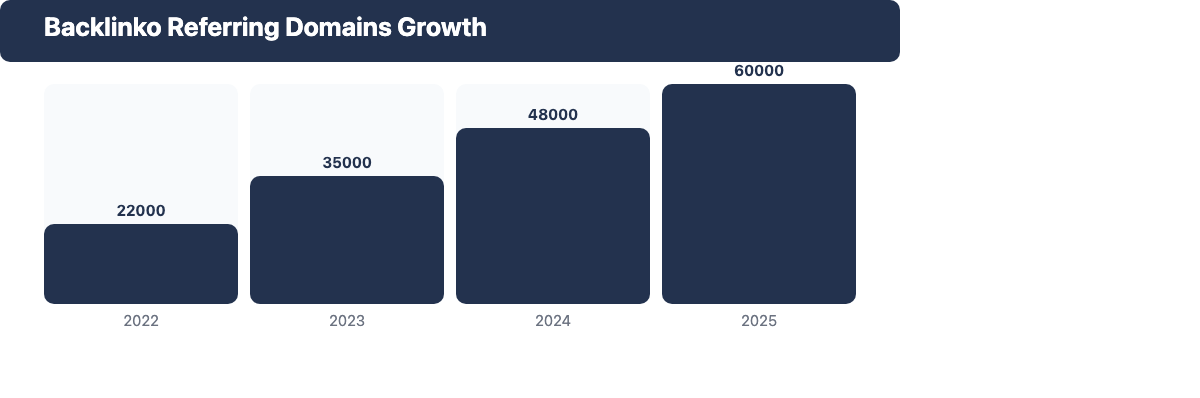
The chart below shows what sustained manual link building looks like at scale: Backlinko grew from 22k to 60k+ referring domains over three years by combining high-quality content with deliberate outreach.
Manual vs. Automated Link Building
The core difference is execution. Manual link building relies on human judgment at every step: target selection, message personalization, relationship development, and placement verification. Automated link building uses tools or services to generate links at scale, typically through comment spam, tiered link wheels, or bulk directory submissions.
| Factor | Manual link building | Automated link building |
|---|---|---|
| Link quality | High: editorially placed, contextually relevant | Variable to low: bulk placements, often low-DR sources |
| Google risk | Minimal when done correctly | High: triggers algorithmic and manual penalties |
| Time investment | High: requires sustained effort | Low: tools handle volume |
| Scalability | Limited without growing your team | Easily scalable with software |
| Long-term value | Strong: links compound over time | Weak: link rot, penalties, devaluation |
| Relationship building | Yes: byproduct of the process | No: purely transactional |
| Best use case | Building sustainable organic authority | Short-term experimental projects (high-risk) |
Automated tactics can produce fast wins. They also carry real penalty risk. A manual approach takes longer per link but builds a profile that holds its value when Google updates its link evaluation models. For most serious SEO campaigns, manual link building is the baseline, not the exception.
Is Manual Link Building Still Worth It?
Yes. Google’s link evaluation systems have grown more sophisticated every year. The types of links that moved rankings five years ago through automation now trigger filters or manual reviews. Meanwhile, manually earned editorial links from relevant domains still correlate strongly with ranking improvements. They are harder to get but harder to devalue. For any site competing in a real search vertical, manual link building is not optional – it is the method.
What Makes a Link Worth Building
Not all manually acquired links carry equal weight. Before investing time in any link, evaluate it against four criteria:
- Relevance. The linking domain covers topics related to yours. A link from a marketing blog to an SEO agency passes more value than a link from a recipe site. Topical relevance tells Google the link reflects genuine editorial endorsement within a subject area.
- Domain authority. Higher domain rating (DR) or domain authority (DA) links carry more weight. A placement on a DR 60 industry publication contributes more to your profile than five DR 15 directory listings.
- Organic traffic. Links from pages that receive real organic traffic are worth more than links from pages with zero traffic. Traffic indicates the page is trusted and indexed, and it means you will also receive referral visitors.
- Editorial placement. The link sits naturally within the page’s content, in a relevant context, not in a footer, sidebar, or author bio. Editorial links embedded in body copy carry the highest weight.
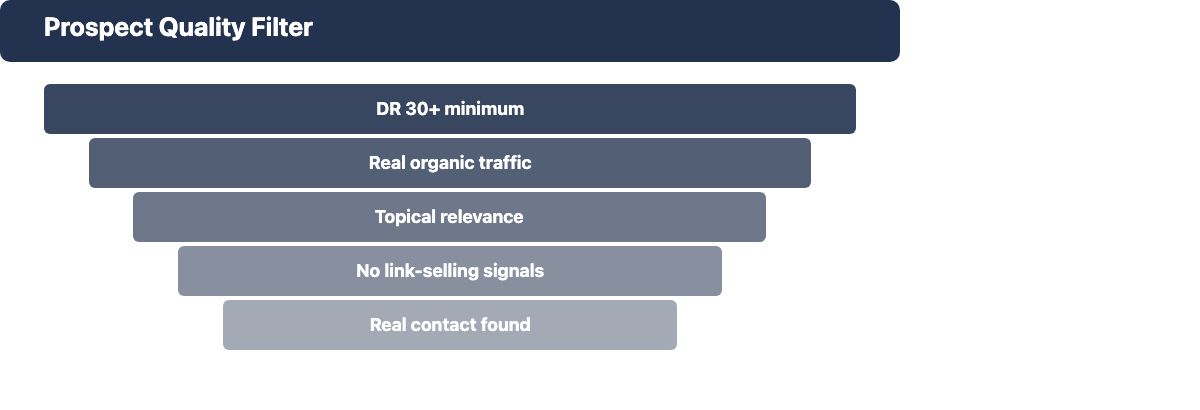
The diagram below shows the five signals that separate a quality outreach prospect from a link seller or low-value target.
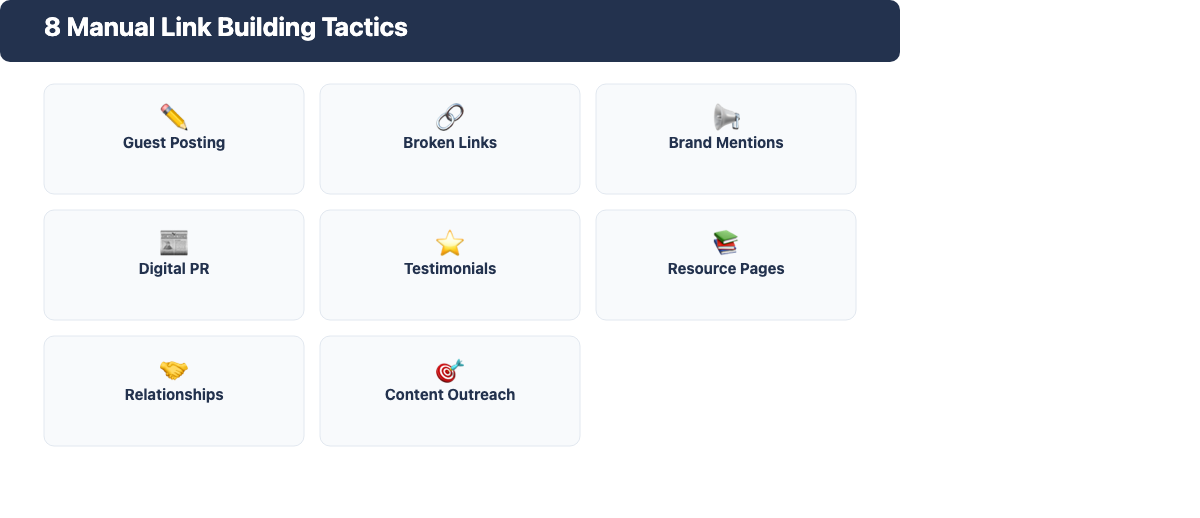
8 Manual Link Building Techniques That Work
The strongest manual campaigns combine multiple tactics rather than relying on a single approach. Each method targets different site types and relationship patterns. Here are the eight most proven techniques.
1. Guest Posting
Guest posting means writing original content for another site in exchange for an editorial link back to your domain. It remains one of the highest-yield manual link building tactics when executed correctly. The key is targeting sites with genuine editorial standards and relevant audiences rather than “write for us” networks that accept anything.
How to do it well: build a list of 20-50 target publications in your niche. Review their content quality and contributor guidelines. Pitch with a specific topic angle that fills a gap in their existing coverage. Deliver a well-researched draft that matches their style. Link naturally within the article to a relevant page on your site. A guest post on a DR 50+ publication in your niche is worth more than dozens of directory submissions.
2. Broken Link Building
Broken link building means finding pages on external sites that link to dead resources, then offering your own content as a replacement. It turns a problem for the site owner into an opportunity for you. Site owners are motivated to fix broken links because they affect their users and their own SEO. Your replacement offer removes friction and gives them a direct solution.
How to do it: use Ahrefs’ broken links report or the Check My Links Chrome extension to identify broken outbound links on relevant pages. Build or identify existing content on your site that covers the same topic. Reach out to the site owner with a specific offer: “I noticed your link to [dead URL] is broken – I have a resource covering the same topic at [your URL] if you would like to update it.”
3. Unlinked Brand Mention Reclamation
When someone mentions your brand, product, or content without linking to you, that is an unlinked mention. Reclaiming these is one of the fastest manual link building wins because the editorial decision to reference you has already been made. You are asking for a link correction, not a new editorial judgment.
How to do it: set up Google Alerts for your brand name, product names, and key team members. Use Ahrefs Content Explorer to find mentions without corresponding links. When you find one, reach out: “Thanks for mentioning [Brand] in your article. Would you be willing to add a link so your readers can find us easily?” Conversion rates for this approach run 20-40% in most niches.
4. Digital PR and Press Coverage
Digital PR means creating newsworthy content or assets that journalists and bloggers will cover independently. Done well, it generates multiple high-authority editorial links from a single content asset. Strong formats include original research, industry surveys, data visualizations, and expert commentary on trending topics.
The outreach component matters as much as the asset. Build a targeted media list of journalists covering your space. Pitch the story angle, not the content. Lead with why their readers will care, not with why you want coverage. A well-executed digital PR campaign can earn 10-50 links from a single piece of content.
5. Testimonials and Reviews
Writing testimonials for products and services you use is a genuinely underused link building tactic. Companies regularly publish customer testimonials on their websites with a link back to the reviewer’s site. If you use software, services, or tools in your industry and can write a substantive testimonial, email the vendor and offer one. The conversion rate is high because you are giving them something they actively want.
Best targets: SaaS tools you use regularly, agencies you have worked with, services in adjacent verticals. Keep the testimonial specific and credible rather than generic. Most companies will publish it on their homepage or a dedicated testimonials page with a link to your site.
6. Resource Page Link Building
Resource pages are curated lists of helpful links compiled by site owners for their audience. Many industry blogs, educational sites, and association pages maintain resource pages that link to tools, guides, and references in a given field. Getting listed on a high-quality resource page earns an editorial, contextually relevant link in a natural collection of similar resources.
How to find them: use Google search operators like intitle:"resources" "[your topic]" or inurl:resources "[your keyword]". Evaluate each page’s DR and relevance. Pitch with a short, specific message: explain your resource, why it fits their list, and why their readers would find it useful.
7. Relationship-Based Link Building
Some of the strongest backlinks come not from structured campaigns but from genuine relationships with other site owners, editors, and content creators in your space. Relationship-based link building means investing time in your industry community – contributing to discussions, sharing other people’s work, collaborating on content, and being a useful presence – so that links happen naturally as a byproduct of relationships.
This is a long-game tactic. It does not produce links on a schedule. But the links it generates are fully editorial, contextually deep, and often come from the highest-authority sites in your niche because editors at those sites only link to people they know and trust.
8. Content-Driven Outreach
Content-driven outreach means building a piece of content specifically designed to earn links – a definitive guide, original research, a free tool, an industry benchmark report – and then actively promoting it to people who cover similar topics. It differs from passive content marketing because outreach is built into the plan from the start. You know who you will contact before you publish.
The strongest link-earning content formats in most industries are: original data studies, comprehensive how-to guides, free tools or calculators, expert roundups, and contrarian analyses that challenge conventional wisdom with documented evidence.
Tools for Manual Link Building
Manual does not mean tool-free. The right toolstack handles the mechanical parts of the process – prospect research, contact finding, outreach tracking – so your time goes into the human-judgment work that machines cannot replace.
| Tool category | Purpose | Examples |
|---|---|---|
| Backlink research | Find link opportunities, analyze competitor profiles, check DR | Ahrefs, Moz, Semrush |
| Email finder | Find contact email addresses for target site owners | Hunter.io, Snov.io, Apollo.io |
| Outreach CRM | Manage prospect lists, send personalized sequences, track responses | Pitchbox, BuzzStream, Mailshake |
| Broken link finder | Identify broken outbound links on target pages | Ahrefs, Check My Links, Screaming Frog |
| Mention monitoring | Track unlinked brand mentions across the web | Google Alerts, Ahrefs Alerts, Mention |
| Content research | Identify what content earns links in your niche | Ahrefs Content Explorer, BuzzSumo |
Hunter.io is the most widely used email finder for link building outreach – enter a domain and it returns verified contact addresses for the site’s team members.
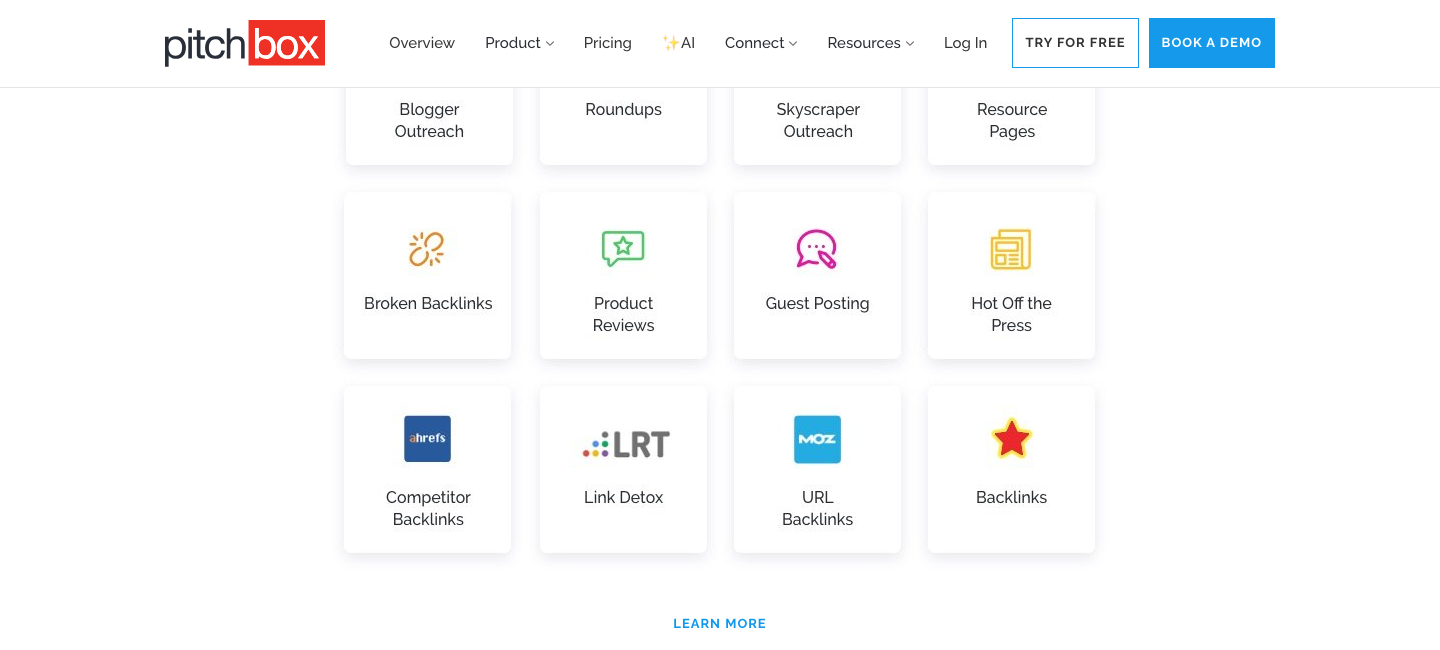
For campaign management at scale, Pitchbox combines prospect discovery, personalized email sequences, and response tracking in a single platform built specifically for link building.
How to Run a Manual Link Building Campaign
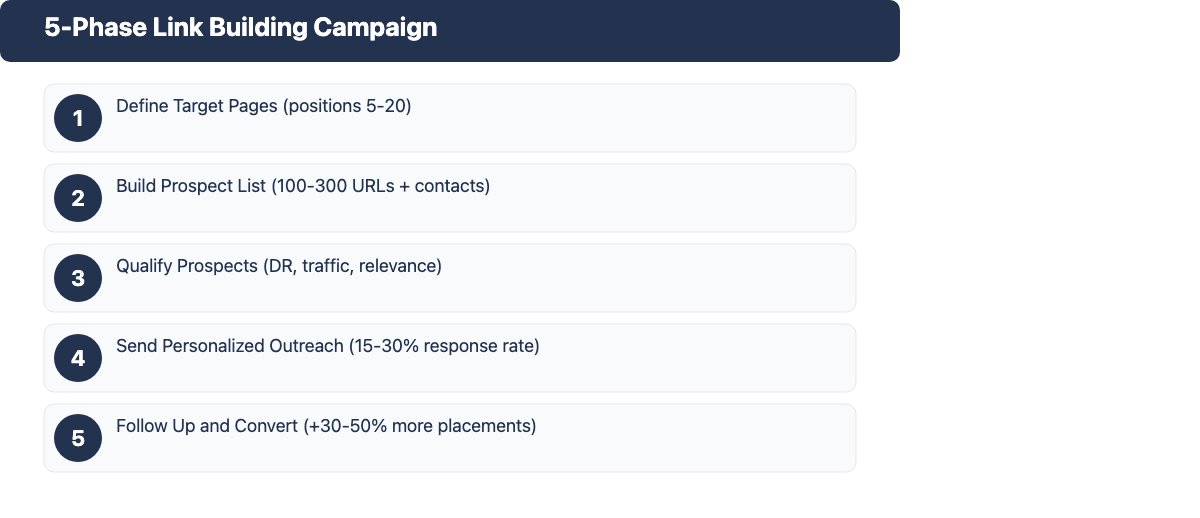
A successful campaign runs in five phases. Each phase feeds the next and the whole cycle repeats monthly or quarterly.
Phase 1: Define Your Target Pages and Goals
Start by identifying which pages on your site need links. Prioritize pages that rank in positions 5-20 for high-value keywords – these are the pages most likely to move with additional link equity. Set a link acquisition target (for example, 10 links per month per target page) and define the minimum DR and relevance criteria each link must meet.
Phase 2: Build Your Prospect List
Use Ahrefs or Semrush to identify which pages link to your top-ranking competitors but not to you. Filter by DR, relevance, and link type. Add broken link opportunities and resource page candidates from your search operator queries. Build a prospect list of 100-300 URLs per campaign with verified contact information for each.
Phase 3: Qualify Each Prospect
Review each prospect before outreach. Confirm the site has real editorial content, not a thin page farm. Check that the domain has organic traffic. Verify the page type is relevant to your content. Remove any prospects where the site clearly sells links or accepts all submissions without review – links from those sites carry no weight and may flag your profile.
Phase 4: Write and Send Personalized Outreach
Personalization is the variable that most directly affects response rate. A generic template gets 2-5% response rates. A message that references a specific article, mentions a genuine connection to their content, and offers clear value gets 15-30% in most niches. Write a short, specific message. Lead with what is in it for them. Make the ask clear and easy to say yes to.
Phase 5: Follow Up and Convert
Most positive responses come after a follow-up. A single follow-up message sent 5-7 days after the first increases response rates by 30-50% on average. After a response, move the conversation to link placement quickly. Provide the exact anchor text, destination URL, and any content assets they need to complete the placement. Confirm the link is live within 48 hours of the commitment.
Manual Link Building Mistakes to Avoid
- Over-optimizing anchor text. Exact-match anchor text on every backlink is one of the clearest signals of a manipulative pattern. Use natural variations: your brand name, partial match phrases, generic terms like “read more,” and URL anchors alongside keyword-rich anchors.
- Targeting only high-DR sites. A diverse profile that includes mid-DR relevant sites often performs better than a profile with only a few very high-DR links. Relevance matters more than raw authority at the site level.
- Skipping prospect qualification. Sending outreach to low-quality or link-selling sites wastes budget and can attract bad links. Qualify every prospect before outreach.
- Abandoning follow-up. The majority of links come from follow-up sequences, not first messages. Build follow-up into your process from the start.
- Building all links to one page. Distribute links across multiple pages to build sitewide authority. Internal linking then passes equity to the pages you most want to rank.
Manual Link Building vs. Buying Links
Paid link placements – where you pay a site owner directly for a link – fall outside Google’s guidelines. Manual outreach campaigns where you pitch content, offer value, and earn links editorially do not. The distinction is the editorial decision. When a site owner links because your content is genuinely useful to their readers, that is an earned link. When they link because you paid them regardless of content quality, that is a paid placement and carries Google penalty risk.
Many outreach campaigns operate in a grey zone where site owners charge “content contribution fees” for guest posts. These have increasing penalty risk as Google improves its detection of paid link networks. If you pay for placements, evaluate the editorial quality of the site carefully. Low-editorial sites charging content fees are the highest-risk segment.
Frequently Asked Questions
How long does manual link building take to show results?
Most SEO campaigns see measurable ranking movement 2-4 months after a consistent link building campaign begins. Individual links take 4-12 weeks to be crawled, evaluated, and reflected in rankings. Build links continuously rather than in bursts for the most stable results.
How many links do I need to rank?
It depends on your keyword’s competition level. Use Ahrefs to check the DR and referring domain count of the pages currently ranking in positions 1-10. Match or exceed the median referring domain count of the top 5 results as a baseline target. For competitive head terms, this can mean 100+ referring domains; for niche long-tail terms, 10-20 may be sufficient.
What is a good monthly link building target?
For most small to mid-size sites, 5-20 new referring domains per month is a sustainable and effective pace. Larger authority-building campaigns in competitive verticals often target 20-50 new domains per month. The quality constraint matters more than the volume target: 5 links from relevant DR 40+ sites outperform 50 links from low-quality directories.
Can I do manual link building myself or should I hire an agency?
Manual link building is learnable and executable in-house. The main barrier is time: a full campaign with prospecting, outreach, follow-up, and link verification can consume 20-40 hours per month. For early-stage sites or small teams, in-house makes sense to control costs. For established sites competing in high-volume verticals, a specialist agency or dedicated link builder typically delivers better ROI through established relationships and workflow efficiency.
What is the difference between manual link building and white hat link building?
White hat link building refers to tactics that comply with Google’s link schemes guidelines. Manual link building describes the execution method – human effort rather than automation. The two overlap significantly: most manual link building tactics are white hat by nature because they rely on genuine editorial decisions. But not all manual tactics are white hat – paying for links manually is still a guideline violation even though no bot is involved.